
Floatation therapy
A guide to floatation therapy, sensory deprivation tanks, float pods, and float rooms.
If you’ve looked into floatation therapy, or have been searching for a deprivation float tank, you’ve probably come across a surprising mix of names — sensory deprivation tank, float room, float pod, float cabin. They all describe the same deeply relaxing experience, yet each reflects a different moment in floating’s evolution. The terminology can make floating seem more complicated than it really is, when at its heart, the experience is beautifully simple: floating weightlessly in warm, tranquil water in a calm, controlled environment.
As floating has spread across the world, the language has grown with it — shaped by different designers, cultures, and eras. Float rooms emerged in the UK as the benchmark for a more spacious, comfortable, and accessible experience, evolving into modern float rooms designed for real-world use across a wide range of layouts and settings. This was followed a decade later by the development of the first pod. Europe started with tanks, but in the late 90s cabins began to appear. Tanks became the contemporary symbol in North America.
Yet with so many different names — tanks, pods, cabins, and rooms — it can be confusing, even distracting from the real question: what exactly is floatation therapy, and what’s the science behind it?
This guide brings clarity, offering a complete introduction to floating and the environments in which it takes place.
For a deeper look at specific parts of the topic, you can also explore what a float tank is, how floatation therapy works, and the benefits of floatation therapy.
In this guide
- What is floatation therapy?
- The many names for floating explained
- The Benefits of Floatation Therapy
- Who is floatation therapy good for?
- Common Misconceptions & Claustrophobia
- Innovation and Design — From Tanks to Rooms
- Floatation Therapy Around the World
- How to Experience Floating for Yourself
- Closing Summary
What is floatation therapy?
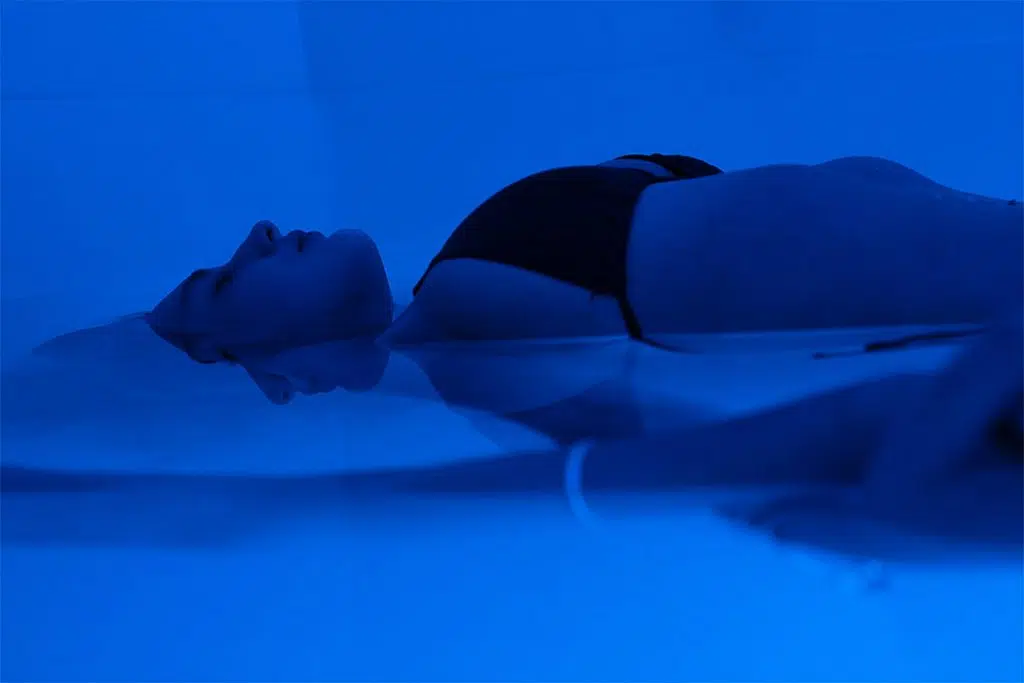
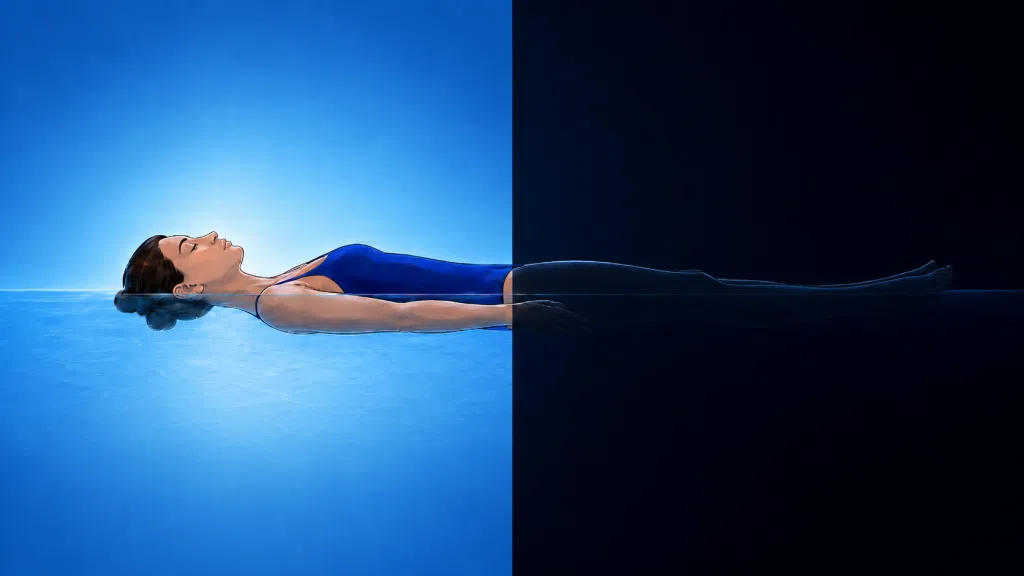
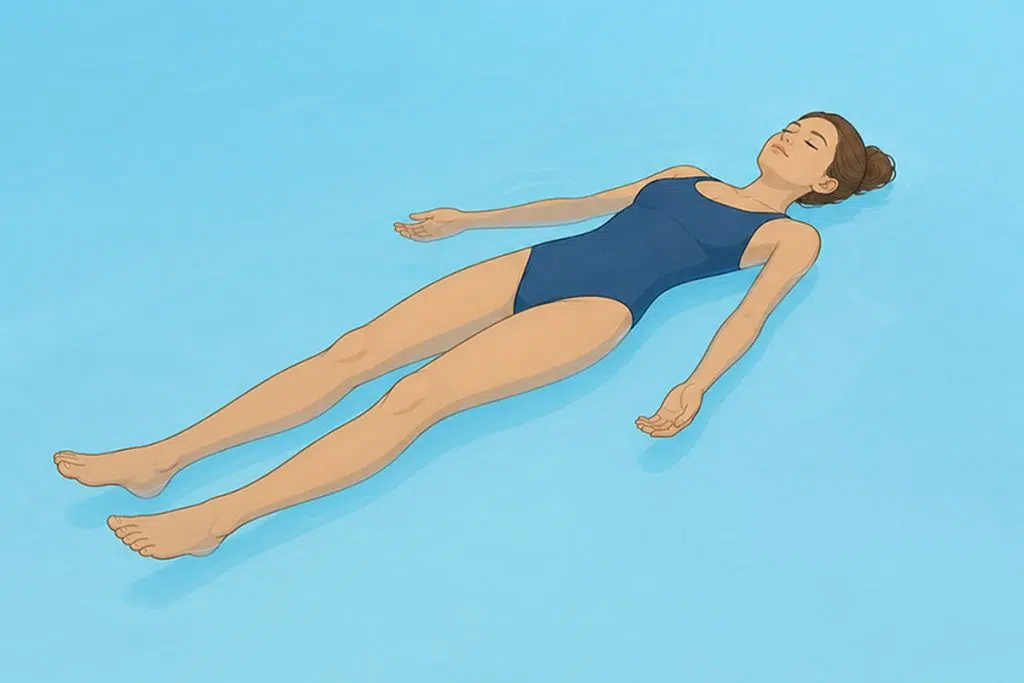
Floatation therapy, often called float therapy, is a relaxation practice where a person floats effortlessly in warm, Epsom salt-saturated water inside a calm, controlled environment with minimum, or no light and sound.
The high salt concentration creates natural buoyancy, allowing the body to rest without effort. The water and air are carefully regulated to feel neutral against the body, helping create a setting where physical tension can begin to soften and the mind has less external input to process.
For most people, this is what makes floating feel different from normal rest. The body is not being asked to hold itself up, adjust posture, or respond constantly to the surrounding environment. Instead, the float creates a setting where stillness, ease, and centredness can develop naturally.
From a scientific perspective, this approach is often described as Floatation-REST, or Restricted Environmental Stimulation Therapy. In simple terms, it refers to a controlled environment where sensory input and physical effort are greatly reduced.
Floating first gained scientific attention in the 1950s through the work of neuroscientist and psychoanalyst Dr John C. Lilly. Today, research continues to explore its potential effects on stress, sleep, anxiety, pain, sports recovery, and emotional wellbeing.
If you’re still getting familiar with the different names and formats used in floating, our guide to what a float tank is explains how tanks, pods, cabins, rooms, and pools all relate to the same core experience.
To understand what is happening inside the float environment in more detail — from buoyancy and temperature to sensory reduction and stillness — see our guide to how floatation therapy works.
The many names for floating explained
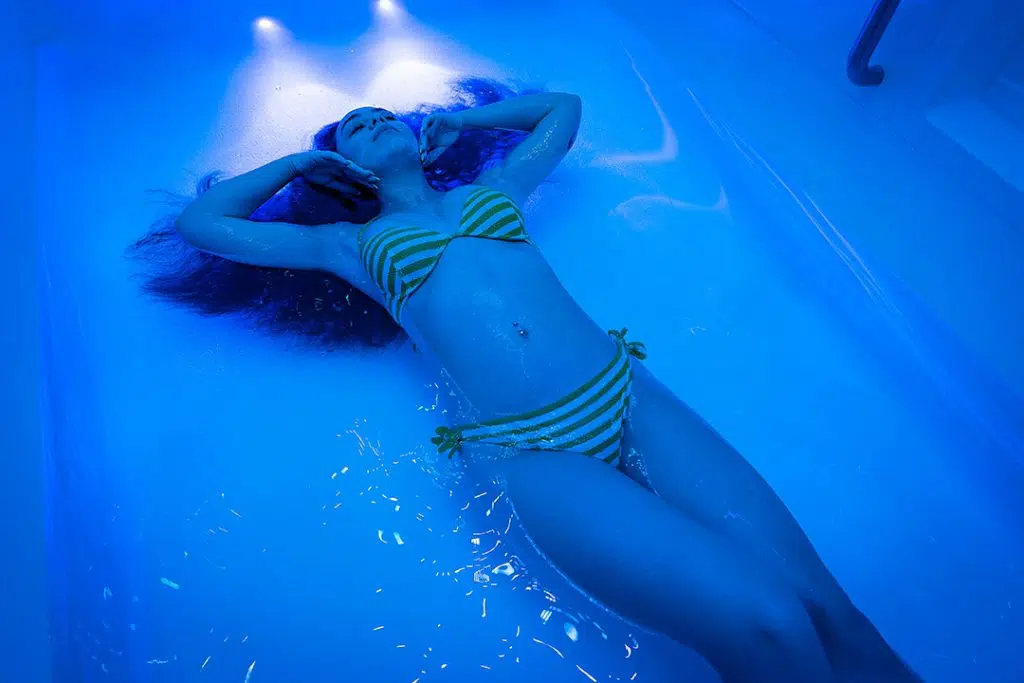
Understanding the language of floating helps make sense of how the experience has evolved. Terms such as isolation tank, sensory deprivation tank, deprivation float tank, float pod, float cabin, float room, and float pool all describe environments built around the same core idea: reducing external input while the body floats effortlessly in warm, salt-saturated water.
Isolation tanks were the earliest float environments, consisting of an 8-foot cube filled with ocean water where subjects were submerged entirely upright, breathing through underwater masks. It was highly intimidating and strictly used for scientific exploration of consciousness.
Sensory deprivation tanks evolved in the early 1970s with the first horizontal float tank but were largely confined to research. Although the phrase is accurate from a scientific perspective, the word “deprivation” can sound harsh. As floating moved into commercial and wellness settings, beginning in the USA in 1979, many centres began using the more approachable terms floatation therapy or float therapy.
Meanwhile, in the late 1970s, the term Restricted Environmental Stimulation Therapy, or R.E.S.T., came into professional use as scientists continued to study the therapeutic effects of the technique. Today, research literature often uses the term Floatation-REST, which describes the controlled reduction of environmental stimulation without relying on the more dramatic language of “deprivation”.
Float tanks originally described the more box-shaped enclosed tanks associated with early commercial floating — what we refer to here as traditional float tanks. Over time, “float tank” also became a broad term used worldwide for many float environments, including pods, cabins, and rooms. It remains one of the most widely understood phrases in both everyday use and academic literature.
Float pods emerged as compact, modernised float environments with curved designs and integrated features. They are well established in North America, Europe and the UK; however, for some first-time floaters, enclosed pod designs can still feel unfamiliar, especially if they are sensitive to enclosed spaces.
Float cabins is a term sometimes used interchangeably with float rooms, but in some countries, it defines a particular type of product: a free-standing float tank offering upright entry and increased internal height, creating a taller, more spacious format than traditional tanks or pods.
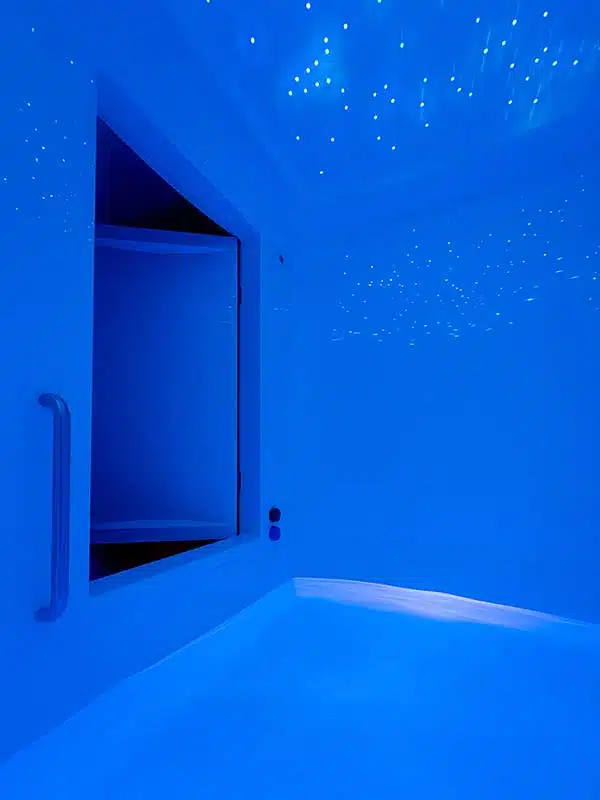
Float rooms, first conceived of in the UK in the late 1980’s, developed as a more spacious, walk-in evolution of the float environment. Full-height interiors, silent airflow, soft lighting, and a calm, spacious feel allow the conditions required for Floatation-REST to be maintained while reducing the sense of enclosure often associated with pods and traditional tanks. Although freestanding, it is designed to integrate into the suite, resulting in more efficient use of space, while blending easily with the theme, or design of the centre.
Float pools have existed in different forms since the late 1990s and have gradually developed their own niche. In these larger formats, the surrounding room or suite becomes part of the float environment, meaning the wider space has to be carefully controlled for temperature, stillness, and reduced stimulation.
Today, most people focus less on what the experience removes and more on what it offers — deep relaxation, restoration, and a rare sense of calm.
If you are new to the terminology, our guide to what a float tank is explains how tanks, pods, cabins, rooms, and pools relate to the same core float experience.
To compare different environments in more detail, including float rooms, pods, and traditional tanks, see our float room vs pod comparison guide.
The benefits of floatation therapy
One of the reasons floatation therapy appeals to such a wide range of people is that it does not offer just one kind of benefit. The same float session can feel physically relieving, mentally quietening, emotionally spacious, and deeply restful.
During a float, many people notice the body beginning to soften first. Muscles may release, breathing often slows, and the usual background noise of thought can begin to quieten 1, 2, 3, 5. For some, this creates a deep sense of physical ease; for others, the most noticeable effect is calm, clarity, or emotional space.
The benefits of floating are often described in simple terms — relaxation, recovery, sleep, calm, creativity, and wellbeing — but they can feel unusually complete because they arise together from the same experience.
For new floaters, it is worth remembering that not every session feels the same. Some floats feel deeply still, while others are lighter or more reflective. Most people find the experience becomes easier to settle into, and more rewarding, with repetition.
For a fuller look at how floating may support physical recovery, mental calm, sleep, clarity, and emotional reset, see our guide to the benefits of floatation therapy.
Who is floatation therapy good for?
Floatation therapy can appeal to many different people because the experience is simple, low-effort, and adaptable. Some people use floating as part of a regular wellbeing routine, while others try it for a more specific reason — stress, physical tension, recovery, poor sleep, or simply the need for quiet.
Sports people and active individuals often explore floating as part of a recovery routine. The feeling of weightlessness can help the body rest without pressure on muscles and joints 4, while the quiet environment may also support visualisation, focus, and mental preparation — something early research and athlete reports have begun to explore.
People with busy or demanding working lives may value floating for a different reason. A float session provides a rare break from noise, screens, decisions, and constant stimulation, creating space for physical and mental de-stressing, clearer thinking, and renewed energy.
Students, creatives, and people doing mentally demanding work may also find floating useful as a way to pause, process information, and create mental space. Some people describe this as greater clarity, fresh perspective, or a more open state for creative thinking.
Many pregnant women also find the support of the water especially welcome, particularly later in pregnancy, when the feeling of weightlessness can offer a rare sense of physical relief.
Floatation therapy is not a replacement for medical care. As with any wellness practice, anyone with specific health concerns should seek appropriate professional advice before floating. But for many people, it offers a rare opportunity to experience deep rest in a calm, carefully controlled environment.
For float centres and wellness businesses, this broad appeal is part of what makes floatation therapy so valuable. A single float environment can support very different client needs — from rest and recovery to calm, clarity, and personal time.
To explore the range of effects people commonly report, see our guide to the benefits of floatation therapy.
Common misconceptions & claustrophobia
Many people imagine floating inside a small, dark capsule — an image left over from the early 1970s scientific tanks. Understandably, that idea can prevent people from trying the experience and make newcomers hesitant.
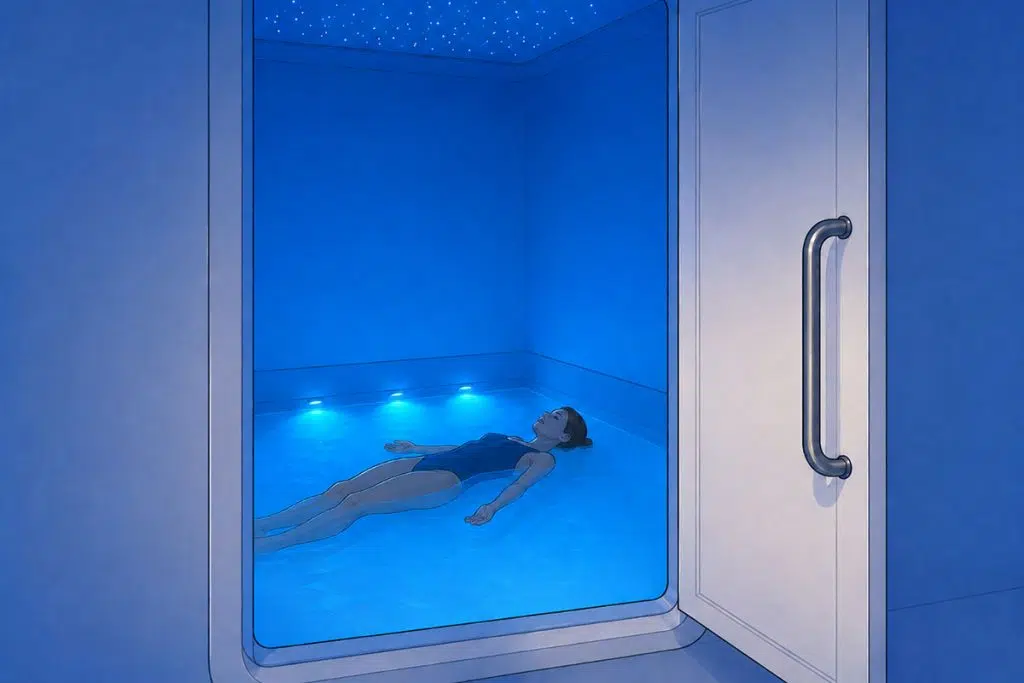
Modern float rooms, however, are designed to feel tranquil, calm, and spacious. There is no lid above you. You can float in complete sensory rest, or with soft dim lighting, gentle quiet music, or even with the door slightly ajar. You remain fully in control throughout the session.
At open days and exhibitions, the overwhelming majority of people describe float rooms as far more inviting and spacious than they imagined — often easing those concerns immediately. Modern float rooms help show that floatation therapy is not about enclosure; it is about creating the necessary conditions for deep rest in freedom, comfort, and calm.
If claustrophobia is something you’re concerned about, you can explore this in more detail in our guide to floating with claustrophobia.

Innovation and design — from tanks to rooms
When the UK’s first commercial float centre, The London Float Centre, opened in Clapham Common in 1986, floating was still closely associated with enclosed tanks. Ron Kemeny saw the promise of floating but recognised he was missing many potential customers. Many people were hesitant to try it because the environment felt intimidating.
He believed floating needed to feel welcoming.
After several years of development and testing, he swapped out his float tanks with float rooms in the early 1990s, and his business took off. He had preserved the purity of floatation-REST while creating a space that felt inviting, architectural, and effortlessly calming. It was the birth of the Ocean float room — a walk-in, full-height environment designed to blend technical precision with aesthetic comfort.
You can explore today’s Ocean float rooms in more detail on our main float rooms page, including layouts, product options, and commercial design features.
Engineering the float room required meticulous refinement. Airflow had to be silent but effective. The environment needed to remain as stable as a float tank. Complete sensory rest had to be achieved. Over more than three decades, these details have shaped float rooms into environments that are both reliable and beautifully simple to use.
Many Ocean float rooms installed over twenty years ago are still in daily use — a testament to durable materials and thoughtful engineering.
From the beginning, our designs prioritised accessibility. Spacious interiors, simple step-in entry, adjustable lighting, and intuitive controls make float rooms suitable for clients of all ages, including pregnant women and those with mobility needs.
Learn more about our journey in Our Story.
Floatation therapy around the world
Floatation therapy may have started as a scientific experiment, but it has become a worldwide movement embraced by wellness centres, dedicated float centres, hospitals, mental-health practitioners, physiotherapists, athletes, artists, and everyday people seeking calm.
Across the UK and Europe, float rooms and cabins are widely used for their spacious design and spa-like atmosphere. Many centres incorporate floating into broader wellbeing pathways alongside massage, heat therapy, and hydrotherapy.
In North America, float tanks were initially the main option for operators, then pods and rooms appeared. As the market matures, many centres are expanding into float rooms to welcome a broader audience, including those who prefer more space.
In Australia, New Zealand, Japan, and Southeast Asia, floating appears in high-end spas, float centres, wellness centres and sports performance programmes.
Research into Floatation-REST continues globally, exploring its potential in stress, chronic pain, PTSD, and sleep.
Ocean Float Rooms supports installations across the UK, USA, Canada, Europe, Japan, Australia, and beyond. You can explore selected client float centres on our global clients page.
See international examples in our Global Clients directory.
How to experience floating for yourself
Floatation therapy is best understood by doing it. Many first-time floaters are often surprised by the experience — a feeling of weightless calm that’s difficult to imagine until you’ve experienced it.
Most major cities and many provincial centres now have float centres or spas offering floatation therapy.
Our advice to you when choosing where to float
With more than 35 years of experience in the float world — including running our own centres, in two countries: the first commercial float centre in the UK in 1986 and the first float centre in Brisbane (the second in Australia) in 1988 — we’ve seen and learnt first-hand what helps someone feel truly at ease during their first float. Your first float should feel calm, welcoming, and easy, and the right environment can make all the difference, especially if you’re new to floating or unsure what to expect.
Finding a float centre near you
When choosing where to float, look for:
- Private float facilities rather than shared float pools
- Professional guidance for your first float
- High-quality water care and maintenance
- Ideally, a chillout space to rest and integrate your float for longer-lasting benefits
Many centres offer introductory packages of three floats — an excellent way to experience how sessions deepen over time.
Explore trusted float centres in our Global Float Centre Directory.
Closing summary
From isolation tanks to float rooms, the language of floating has changed, but the purpose has remained the same: to give the body and mind a space to rest, recover, and reconnect.
At Ocean Float Rooms, we’ve spent more than thirty years refining that experience — creating environments that are both carefully designed and effective. Whether you float for relaxation, recovery, creativity, or emotional balance, the essence of floatation therapy is universal — weightless calm in its purest form.
Core guides
Explore floatation therapy in more detail
Floatation therapy FAQs
Frequently asked questions about floatation therapy.
What is floatation therapy?
Floatation therapy involves floating effortlessly in warm Epsom-salt water inside a quiet, temperature-controlled environment to encourage deep relaxation and stress relief.
Is a float pod the same as a sensory deprivation tank?
They describe similar environments, but “pod” refers to a modern compact design, while “sensory deprivation tank” is the older scientific term for a float tank.
What’s the difference between a float room and a float tank?
A float room offers more space, height, and accessibility, making it more comfortable and reassuring for many people.
Is floating an option for people with claustrophobia?
Of course! Float rooms are inviting and spacious, with adjustable lighting and music so you can control your comfort.
How warm is the water?
The water and air are kept at skin temperature when a person is relaxed— about 35 °C / 95 °F.
How often should I float?
Many people benefit from a single session, but floats get rapidly better, so weekly or bi-weekly/fortnightly floats usually provide deeper, longer-lasting results. In a busy city, even a monthly float provides a significant reset
Can I add a float room to my business?
Yes. Ocean Float Rooms installs float rooms worldwide and provides full training and long-term support.
What is a deprivation float tank?
A deprivation float tank is an older term for a sensory deprivation tank, or float tank, used in floatation therapy. It refers to an environment designed to reduce external sensory input so the body and mind can deeply relax.
Still have questions?
Send us a message and we’ll put you in touch with a member of our international team today.
Further reading
Related guides



References
- Feinstein JS, Khalsa SS, Yeh H-W, Wohlrab C, Simmons WK, Stein MB, et al. (2018).
Examining the short-term anxiolytic and antidepressant effect of Floatation-REST.
PLoS ONE, 13(2), e0190292. - Feinstein JS, Khalsa SS, Yeh H, Al Zoubi O, Arevian AC, Wohlrab C, et al. (2018).
The Elicitation of Relaxation and Interoceptive Awareness Using Floatation Therapy in Individuals With High Anxiety Sensitivity.
Biological Psychiatry: Cognitive Neuroscience and Neuroimaging, 3(6), 555–562. - Flux MC, Fine TH, Poplin T, Al Zoubi O, Schoenhals WA, Schettler J, et al. (2022).
Exploring the acute cardiovascular effects of Floatation-REST.
Frontiers in Neuroscience, 16, 995594. - Broderick V, Uiga L, Driller M. (2019).
Flotation-restricted environmental stimulation therapy improves sleep and performance recovery in athletes.
Performance Enhancement & Health, 7(1–2), 100149. - Kjellgren A, Sundequist U, Norlander T, Archer T. (2001).
Effects of Flotation-REST on Muscle Tension Pain.
Pain Research & Management, 6(4), 181–189. - Suedfeld P, Metcalfe J, Bluck S. (1987).
Enhancement of scientific creativity by flotation REST (Restricted Environmental Stimulation Technique).
Journal of Environmental Psychology, 7, 219–231.