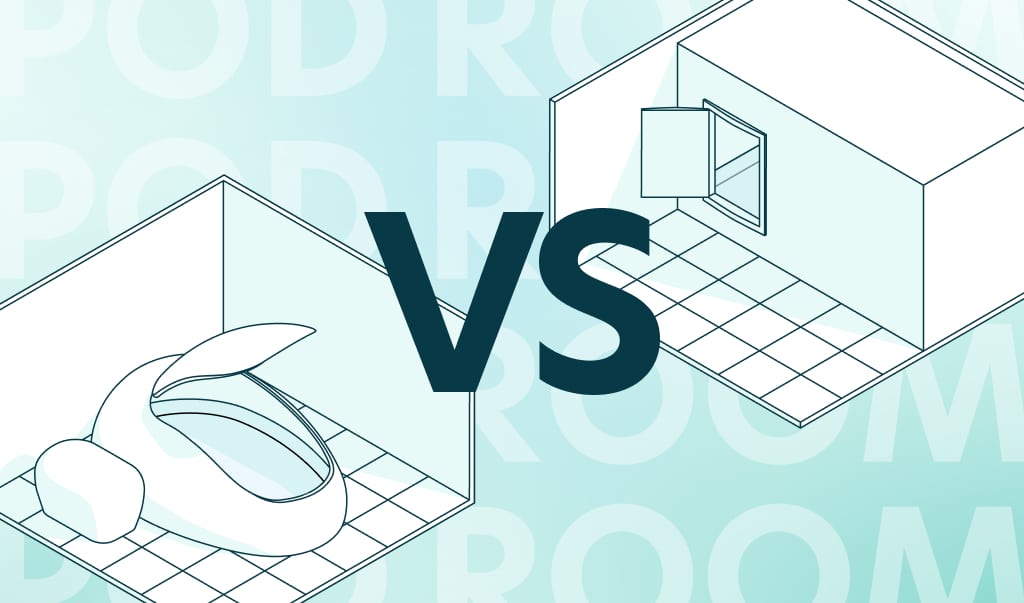
Comparison series
Float tank comparison guide
If you are comparing float tanks for a float centre, spa, or wellness business, you are not simply comparing products. You are choosing between very different floatation environments — each with its own effect on comfort, privacy, accessibility, layout, and commercial fit.
Float rooms are a modern evolution of the float tank, offering the same therapy in a more accessible, spacious environment.
This guide compares float rooms, float pods, and open float pools to help you understand how they differ in practice, and which format may best suit your float clients, your space, and your business goals.
Ocean Float Rooms specialises in full-height, walk-in float rooms. Drawing on decades of float centre experience and client feedback, this guide explains how float rooms differ from other float tank formats, and why many businesses see them as the most complete long-term solution.
If you are specifically exploring Ocean Float Rooms as a walk-in type of float tank, visit our float rooms overview to compare layouts, features, and options.
New to the terminology? Our guide to what a float tank is explains the broader category before you compare the main environments for your project.
In this article
- Quick comparison table
- Understanding the main float tank formats
- Space, comfort, and accessibility
- Control and float conditions
- Cleaning, maintenance, and day-to-day practicality
- Float suite layout and space efficiency
- Design flexibility and installation potential
- Customer appeal and business fit
- Why many businesses choose float rooms
- Conclusion
Compare float tanks: Float rooms, pods, and open pools at a glance
Before looking at each format in more detail, here is a quick comparison of the main differences between float rooms, float pods, and open float pools.
| Feature | Float Room | Float Pod | Open Float Pool |
|---|---|---|---|
| User experience | |||
| Standing space | High | Lower | High |
| Accessibility potential | High | Moderate | High |
| Ease of entry and exit | High | Moderate | High |
| Comfort for claustrophobic users | High | Lower | High |
| Privacy | High | High | High |
| Sense of space | High | Moderate | Very high |
| First-time floater comfort | High | Moderate | Moderate to high |
| Practical operation | |||
| Ease of cleaning access | High | Moderate | High |
| Service and maintenance ease | High | High/Moderate | Lower |
| Temperature control consistency | High | High | Moderate |
| Shared or assisted float sessions | Double Float Rooms | Rare | Possible |
| Business and installation | |||
| Commercial suitability | High | Moderate | Varies |
| Float suite space efficiency | High | Moderate | Varies |
| Design flexibility | High | Lower | Moderate |
| Installation flexibility | High | Moderate | Moderate |
| Energy efficiency | High/Moderate | High/Moderate | Lower |
| Operations ease | High | High | Moderate |
| Versatility of use | High | Moderate | Moderate |
| Investment | |||
| Typical upfront investment* | $$–$$$ | $–$$$$ | $$–$$$ |
| Long-term value over time | High | Varies | Varies |
Swipe to compare →
* This includes quality of float equipment, installation requirements, and site preparation requirements.
This table gives a broad overview. To explore the design, layout options, and commercial advantages of Ocean Float Rooms in more detail, visit our float rooms overview.
Understanding the main float tank formats

Float rooms
A float room is a full-height, walk-in float tank that gives the user space to stand, move naturally, and enter the water without the feel of climbing into an enclosed unit. It offers a private, fully controlled float environment while feeling more like a calm room than a capsule or chamber.
To explore how Ocean Float Rooms are configured for commercial use, see our float rooms page.

Float pods
Float pods are a more aesthetic looking float tank with a hinged lid or canopy. They are often chosen for their sculptural appearance and strong float-tank identity, but the enclosed design is off-putting to a significant number of space sensitive people.
Open float pools
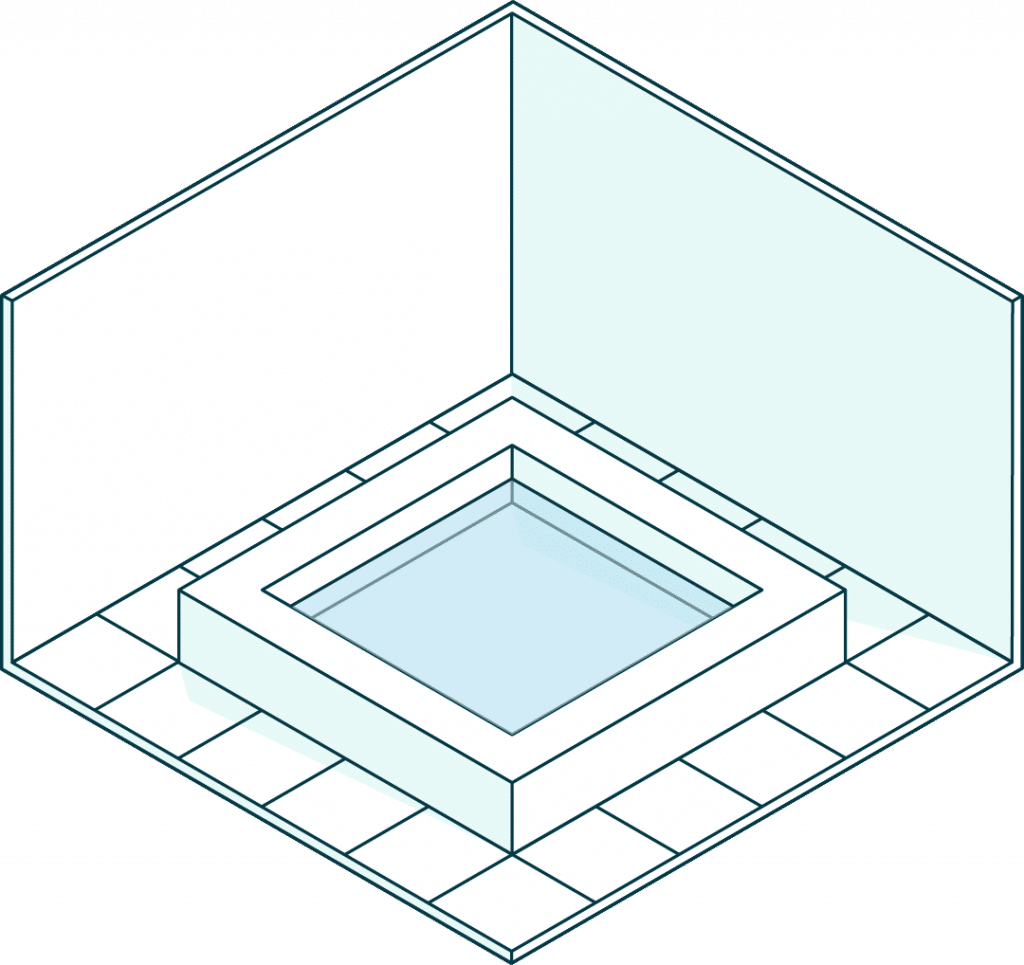
Open float pools create a larger, more open floatation environment. That openness can appeal to some users, but it can also make the wider float therapy environment more difficult to control, particularly in terms of room temperature and atmosphere, than in a dedicated float room or pod.
Space, comfort, and accessibility
All float tanks aim to deliver the same core benefit: a calm, warm, stable, and buoyant environment that supports deep relaxation. What changes markedly from one format to another is how that environment feels to the person about to use it.
A float room creates a more spacious experience from the moment the client enters the suite. There is no lid to lower, no crouching to get in, and no need to adapt to a confined shape. The experience feels calmer, more natural, and more inviting from the beginning.
Pods can work very well for many floaters, particularly those who feel comfortable with enclosed formats. But by design, they are not inviting to many other potential float clients.
Open float pools offer openness too, but there can be a trade-off with environmental conditions (Which we cover in more depth below).
Ease of entry matters just as much. Float rooms allow floaters to walk in upright, orient themselves easily, and settle into the float without negotiating a more enclosed chamber. For some people, that simply feels more comfortable. For others, it makes floating feel possible in the first place.
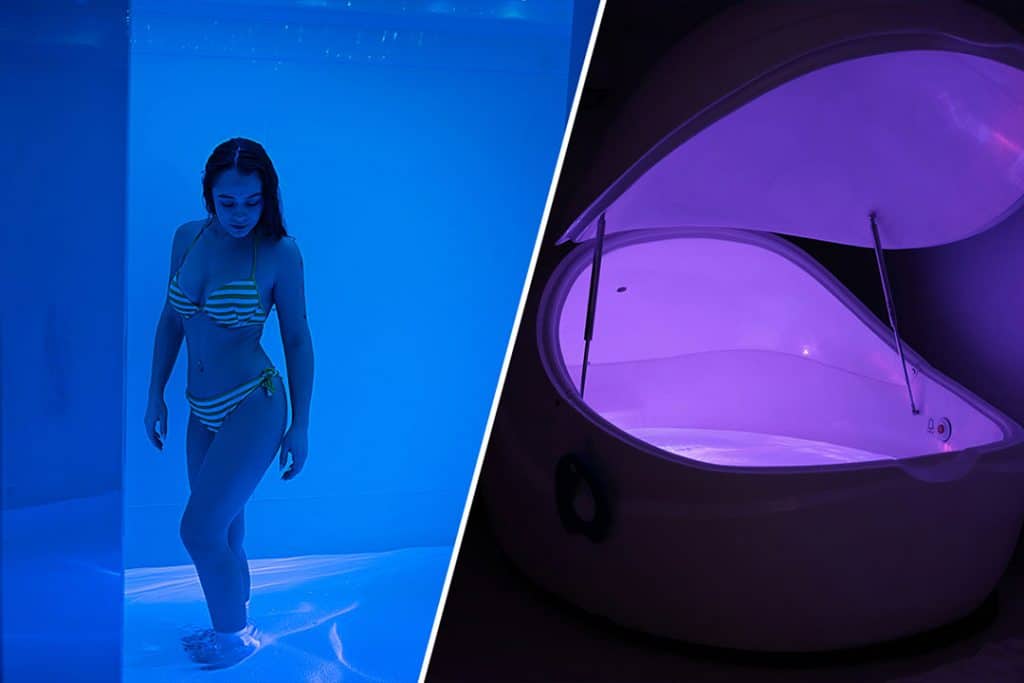
What that can feel like in practice:
Editor’s Note: The Double Float Room measures 96.5” (244cm) long, 80.5” (204.5cm) wide, with an internal height of 79” (200cm) — larger than a king-sized bed, with full standing room.
For a deeper look at how float room design can help nervous first-time floaters and those concerned about enclosed spaces, read our guide to claustrophobia and float rooms.
Control and float conditions
The ability to maintain a calm, consistent environment around the floater is central to the float experience.
Float rooms combine an easy to control, stable, float environment with a full-height, walk-in design. That gives floaters their own dedicated space without making the environment feel restrictive. The result is a perfect balance between the highest quality float and comfort.
A well-designed, better-quality pod also offers an easy to control, stable, float environment for those who are comfortable in the more enclosed environment.
Open float pools may feel physically open, but it can be significantly harder to create a warm, stable environment, even with greater investment. Some open pool manufacturers, resort to fitting infrared heating panels on the ceiling above the float pool to warm the bones and body, effectively “dumbing down” the complete “sensory rest” float experience and its benefits. We explore these challenges in more detail in our open float pools vs float tanks comparison guide.
For many businesses, the best option is not simply the most open format, or the most compact one, but the one that creates the most authentic reassuring experience for the client, with an easy to manage suite environment.
Cleaning, maintenance, and day-to-day practicality
When comparing float tanks for business use, the practical reality matters just as much as the front-end experience.
A float room’s smooth vertical lines offer straightforward physical access around the unit and within the suite. That can make cleaning, inspection, and routine maintenance more practical in a commercial setting, even in a smaller suite. The walk-in design also supports a smoother operational flow between sessions.
Pods and other enclosed tanks can work perfectly well, but in some ways, they may be less convenient to access physically, especially when installed in a smaller suite where cleaning reach, circulation around the unit, or servicing access is tighter.
This is one of the reasons experienced operators look beyond appearance alone. The real question is not just how the float tank looks on installation day, but how it performs operationally over the years that follow.
Float suite layout and space efficiency
One of the most persistent assumptions in floatation is that smaller-looking equipment must automatically use less space. In practice, that is rarely not the case.
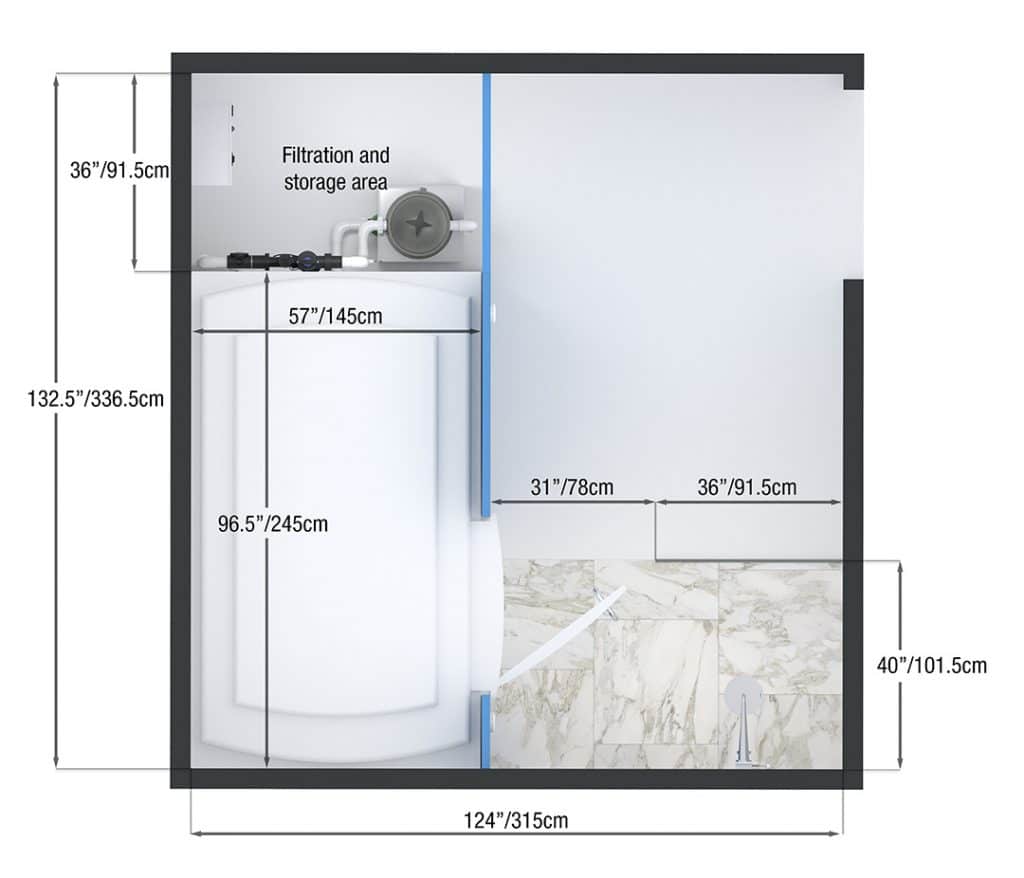
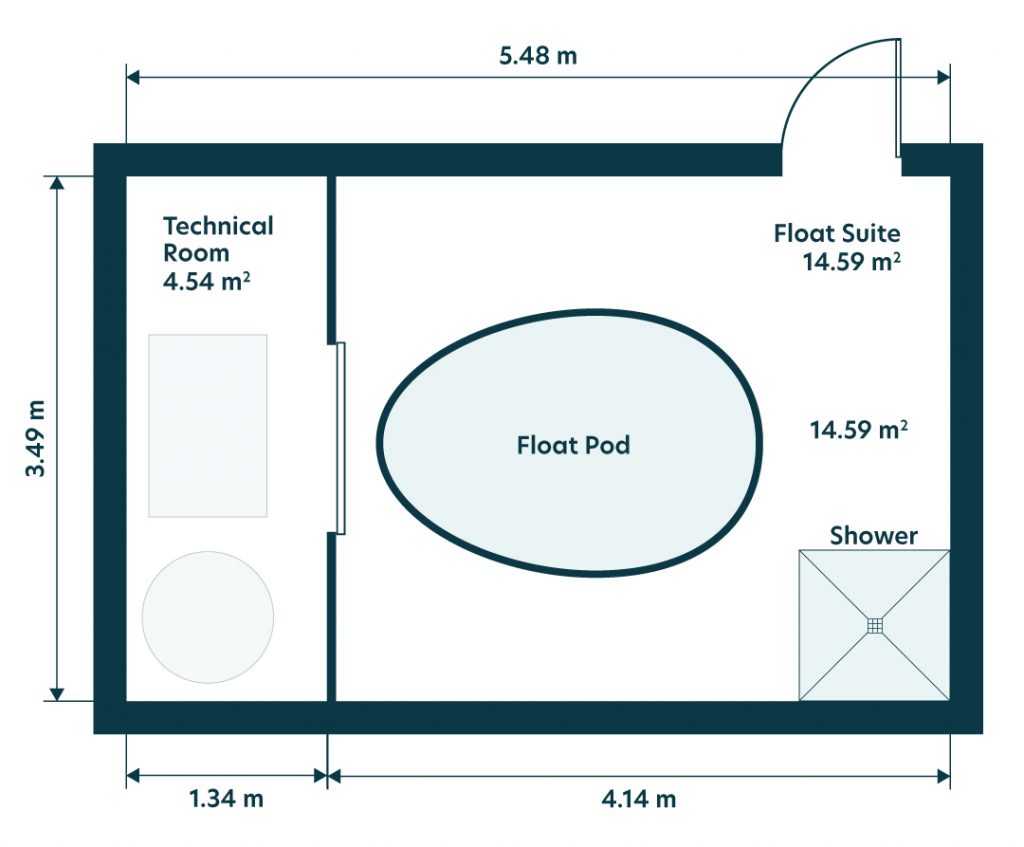
A float room is typically designed to work with the suite in a practical, architectural way. In almost all installations it sits efficiently against two walls, while leaving the rest of the room to function clearly for showering, changing, access, and plant layout. In effect, it creates a room within a room.
Pods can appear compact at first glance, but their shape and surrounding clearance requirements can create underused areas within the suite which effects the efficient use of space in the wider room. In a tighter installation their shape can compromise circulation around the unit, as well as cleaning and servicing access.
Open float pools, depending on their shape (rectangular, round, oval) offer varying degrees of space efficiency, but present challenges around environmental stability.
We explore this in more detail in our dedicated Float room vs float pod: a space comparison guide.
Design flexibility and installation potential
Another major difference between float tank formats is how flexibly they can be integrated into the wider wellness environment.
Float rooms offer a high degree of design flexibility. They can often be planned around the site room more intelligently, and the finished result can feel more aligned with the surrounding spa or wellness setting. That is especially valuable for businesses that want floating to feel fully integrated rather than added on.
Pods are usually more fixed in style. That can simplify some decisions, but it can also limit how fully the experience can be tailored to the site, brand, or floaters journey.
Open float pools, with additional design planning and investment, can create a visual statement, such as a Roman bath look in the suite, or some other theme, but they also require more planning and possible cost around effective environmental control.
Float client appeal and business fit
For many businesses, the biggest question is not simply which float tank works, but which one more people will feel comfortable trying.
That is where float rooms often stand out. The walk-in format, full-height interior, and room-like feel can make floating feel more understandable, more approachable, and more of a premium experience to a broader range of potential float clients.
For some centres, that translates into an easier first conversation, a more reassuring first impression, and a stronger sense of confidence before the floater even gets in the water.
Pods can still be the right fit for some brands and floaters. But if your aim is to create a format that feels welcoming, flexible, and commercially strong across a wide audience, a float room often has the advantage.
Why many businesses choose float rooms
Float rooms are not simply a more spacious alternative to pods. They reflect a different approach to floatation design.
The goal is not only to deliver maximum sensory rest, but to do so in a way that feels spacious, inviting, reassuring, and commercially practical. For any businesses, that combination can result in greater float client numbers and a higher profit margin.
A well-designed float room can help create:
- a more inviting and reassuring first impression
- a more accessible entry experience
- a stronger sense of privacy and comfort
- easier day-to-day cleaning and operation
- more effective use of the wider float suite
- a more premium overall float client journey
That is why many centres choose a float room when they want floating to feel not only effective, but beautifully integrated into the wider business.
For a closer look at Ocean’s walk-in float room designs, including single and double configurations, explore our float room options.
Conclusion
There is no single float tank format that suits every business in exactly the same way. The right choice depends on your space, your float clients, your brand, and the kind of experience you want to deliver.
But if your priorities include spaciousness, accessibility, privacy, strong first-time appeal, practical day-to-day operation, and a premium wellness feel, a float room offers a compelling advantage over more enclosed float tank formats.
If you are still comparing options, the best next step is usually to look more closely at the factors that matter most to your project — whether that is space efficiency, float client confidence, profitability, or long-term business fit.
Related articles
Explore more float room guides
Continue exploring the topics that shape first-time confidence, comfort, and the wider float room experience.