
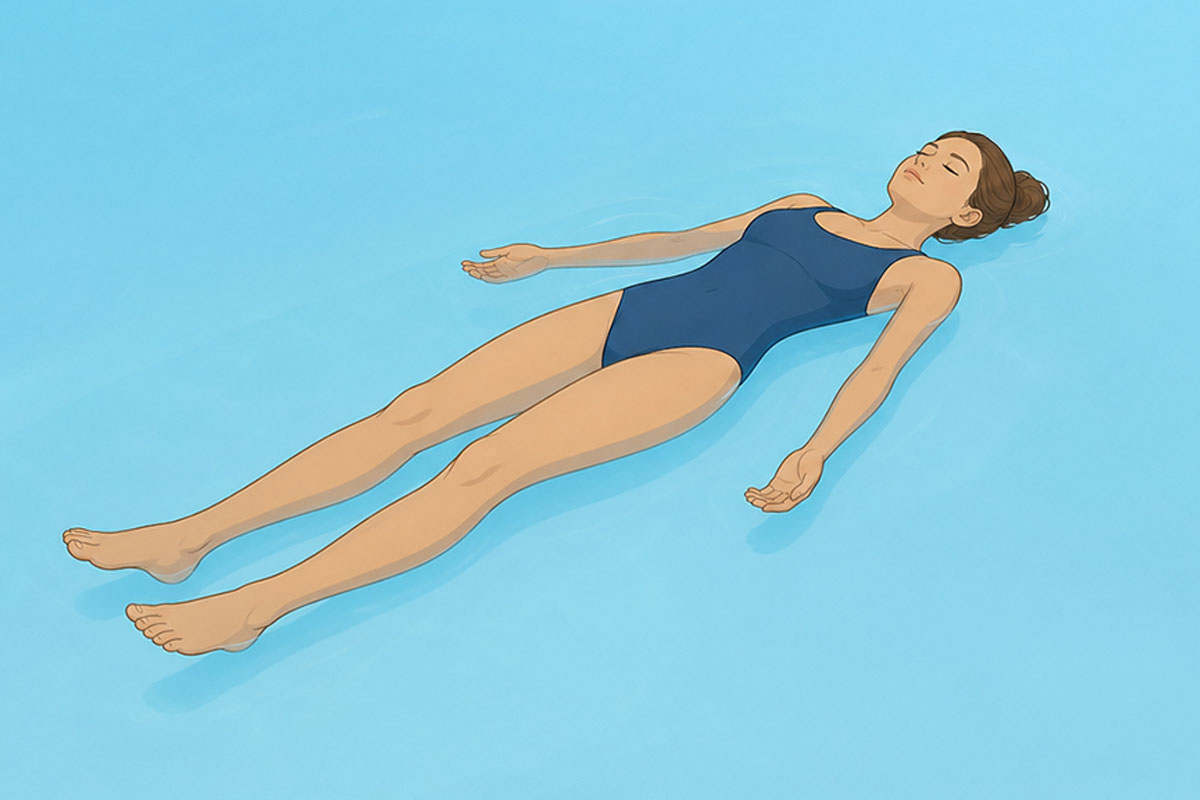
The benefits of floatation therapy
How floating supports physical recovery, mental clarity, and deep rest
Floatation therapy is often described as deeply relaxing, but what makes it distinctive is how consistently people report a similar shift: the muscles relax, the body unwinds, breathing slows, and the usual background noise of thought begins to quieten.
For some, this feels meditative, but easier to achieve. For others, it feels like a rare form of uninterrupted rest, an unexpected relief. The experience itself is simple, but the effects can feel surprisingly complete — physical, mental, and emotional at the same time.
These benefits don’t tend to appear in isolation, or to be transient. People often describe a combination of physical release, mental calm, better sleep, greater clarity, and a more grounded overall state.
What makes floating unusual is not just the depth of these effects, but how they arise: not separately, but as part of the same experience.
In this article, we’ll explore these benefits in more detail — starting with the physical effects, then moving into mental and emotional changes, and finally looking at why the environment plays such an important role in shaping the experience.
This article is part of our Floatation Therapy Guide, exploring how floating works, its benefits, and the different types of float environments.
Physical relaxation and recovery
One of the most immediate ways floatation therapy is experienced is through physical relief — a gradual, often quite rapid release of muscular tension and pressure throughout the body.
Many people notice this first as a simple feeling of ease — of being fully held. The body no longer needs to brace or search for a comfortable position in the usual way, and as familiarity with the environment grows, this allows for a deeper level of physical letting go.
As the session continues, areas of tightness may begin to soften. Some people feel this as a release through the shoulders, back, hips, or legs; others notice a more general sense of physical ease and relaxation.
Unlike lying on a bed, relaxation is virtually unhindered. There are no interruptions from pressure, postural shifts or discomfort, or any resistance to gravity.
Over the course of a float, this can lead to a gentle sense of decompression through the spine and a reduction in accumulated physical strain, or tension. For some, this is felt as a release of tightness in specific areas; for others, as a more general sense of physical ease and recovery. For many people, this is one of the most immediate and memorable benefits of the session 1, 10.
Why this level of rest feels different
What makes this experience distinct is not simply that the body relaxes, but that it is able to do so without sensory interruption.
In everyday life, physical relaxation is often partial — the body may be at rest, but still responding to some degree to gravity, temperature, and other sensory stimuli. In a float environment, these external demands are neutralised or minimised, allowing the body to settle more completely into stillness, and offering the potential to produce a far more powerful relaxation response, even during the first session.
If you would like to understand why the body is able to relax so completely in this environment, you can explore the underlying mechanisms in our guide to how floatation therapy works.
A foundation for ongoing recovery
While many people notice physical relief during their first float, the effects usually build with subsequent floats. As the body becomes more familiar with and sensitive to the experience, it can relax more quickly and more completely, allowing the benefits to deepen over time.
For centres, this is an important part of the client journey — what may begin as a novel experience for some, can become an increasingly reliable and repeatable form of physical recovery.
But the benefits of floating do not stop with the body. As physical effort falls away, many people also notice a shift in their mental and emotional state.
Mental calm, emotional reset, and reduced stress
As the body begins to unwind, many people also notice a quieter, calmer internal state.
For many, the change is obvious: breathing slows, thoughts feel less urgent, and the usual mental noise begins to quieten down. For others, the shift is gentler but still valuable — a growing sense of calmness, centredness, and relief from constant stimulation.
Research into Floatation-REST has explored its effects on anxiety sensitivity and stress, with findings suggesting meaningful reductions following float sessions 1, 2.
In practical terms, this is often experienced as mental and emotional space. Thoughts may still be present, but they can feel less consuming. The mind is no longer being pulled in multiple directions at once, and feelings can settle more naturally.
This is why floating is often described not just as physical rest, but as a form of emotional reset — a pause from the pace, pressure, and interruption of everyday life.
That calmer internal state usually carries forward, well beyond the session itself.
Sleep and nervous system regulation
One of the most commonly reported after-effects of floating is improved sleep, particularly when sessions are repeated over time.
After a float, many people describe feeling calmer, less physically tense, and more ready to rest. That sense of ease can carry into the evening, the next day, and sometimes beyond.
Many floaters find they fall asleep more easily, wake less during the night, or feel more restored the following day. Research has explored this connection, particularly in athletes and individuals under stress, where Floatation-REST has been associated with improved recovery and sleep quality 5, 11.
While results vary, the pattern is consistent: when the body has been given the opportunity to relax and let go, it often impacts in a positive way on sleep.
For people with busy lives, or who struggle to switch off physically or mentally, this can make floating valuable not only during the session itself, but in the hours and days that follow.
Alongside better rest, many people also notice a different kind of benefit — a clearer, quieter way of thinking.
Mental clarity and reduced cognitive load
Modern life places the brain under constant demand and interruption. Floating gives many people a rare break from that input, creating space for clearer, less reactive thinking.
With fewer interruptions, attention often turns inward. Without the usual pull of screens, noise, movement, and decision-making, the mind can settle into a slower and more natural rhythm.
Many floaters describe a state similar to a successful meditation, where thoughts become less urgent and more observational. Others notice improved focus, perspective, or creativity. Research has explored how Floatation-REST can influence interoception — awareness of internal bodily states — as well as altered perception of time and consciousness 2, 6, 8, 12.
This is not about trying to force clarity or focus, but allowing it to emerge. With less competing for attention, the mind often has more room to process, organise, or simply rest.
In a world of constant input, this reduction in mental demand leads to feeling clearer, calmer, and more present. For many people, floating provides something rare: “time out” from the demands and distractions of everyday life 1, 13.
This is one reason floating is also described not just as relaxing, but as mentally refreshing.
If you would like to understand the mechanisms behind this more deeply, see our guide to how floatation therapy works.
Why the environment still matters
Although the benefits of floating are widely reported, their depth is not automatic. The easier the environment makes it for someone to relax, the more fully they are likely to experience the full effects of the float.
For the body and mind to settle fully, the space needs to feel comfortable, safe, easy to understand, and free from distraction. If a person in any way feels confined, unsure, or slightly on edge, the nervous system may remain alert and inhibit the degree of relaxation.
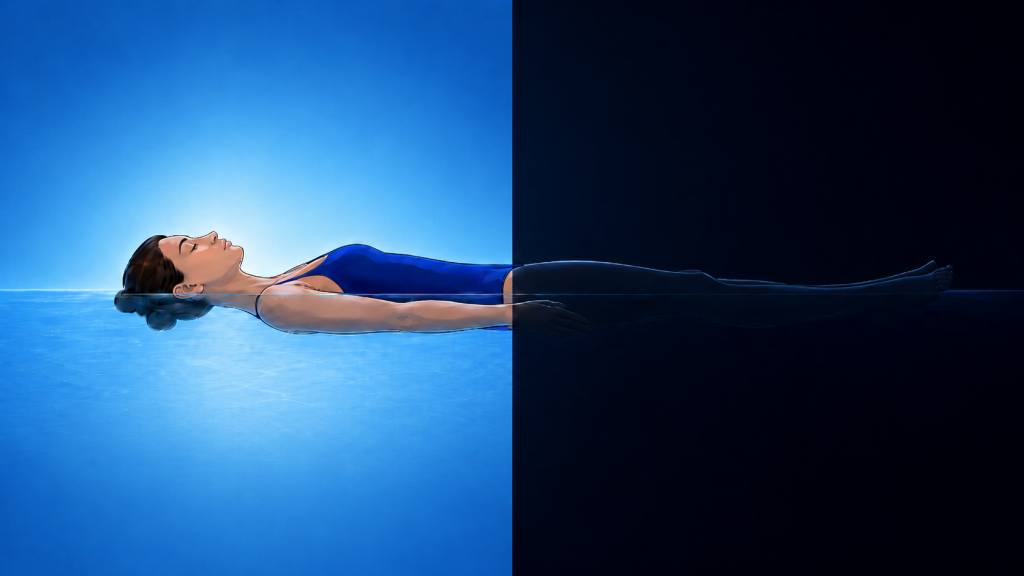
This is why environment matters so much. Floating is not only about what is removed, or greatly reduced — light, sound, temperature contrast, tactile awareness, and the usual effort of holding the body — but about what is created: a calm, reassuring space that makes letting go feel easier. A space to relax.
Across real float centres, one pattern has appeared again and again: while the principles of floating remain the same, not every environment makes those benefits equally easy to access for everyone.
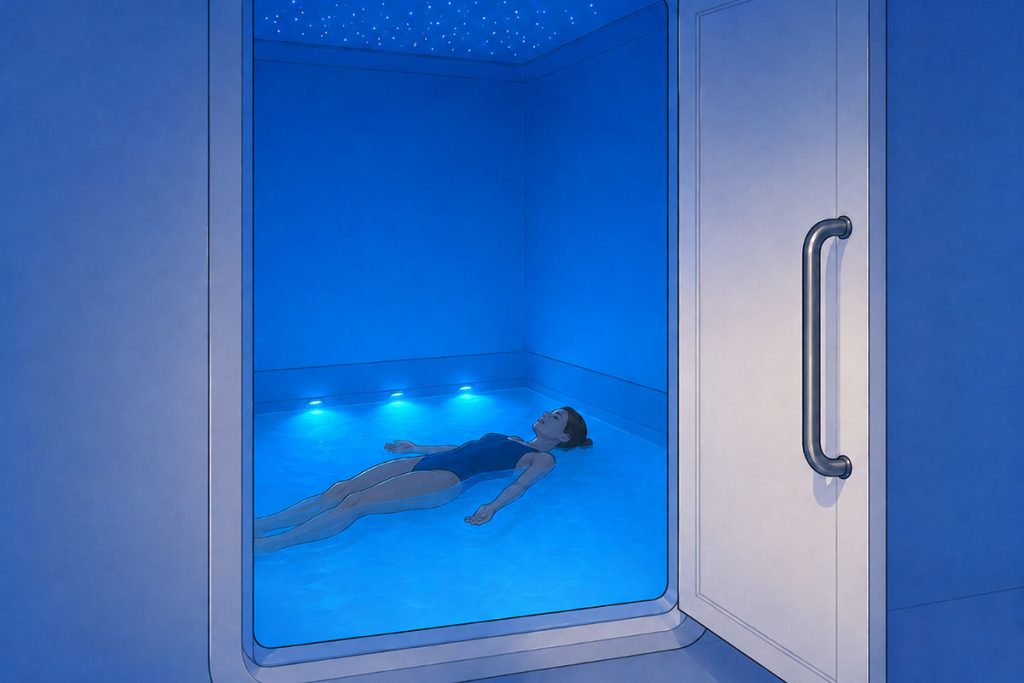
Modern float environments are designed to support this process more clearly, for more people. For example, cabins, or full-height, walk-in float rooms are often used in commercial settings to create a more spacious, reassuring environment while maintaining the conditions needed for effective floating.
As noted elsewhere, not every float session feels the same. Some sessions feel deeply still, while others are lighter or more reflective. This variation is normal, and may reflect what the mind and body need at that time. It can also be part of how the experience gradually deepens with consecutive floats.
Why benefits build over time
While some benefits are felt immediately, floating usually becomes more effective with repetition.
As the body becomes familiar with the environment, it can settle more quickly and naturally into the float. What may feel new during a first session can become easier to access in the second, third, and later floats.
Many floaters find that their second or third session feels noticeably deeper than their first. Over time, floating can become a reliable way to reset, recover, and rebalance.
This is one of the reasons many centres recommend an initial series of floats, rather than a single session.
Closing summary
The benefits of floatation therapy are often described in simple terms — relaxation, relief, clarity, sleep, calm — but behind those outcomes is a carefully created state of deep rest.
Floatation therapy is not simply about relaxation. It is about creating the conditions where relaxation, recovery, and mental clarity can occur more naturally, more completely and with greater ease.
Those conditions are explored in more depth in our guide to how floatation therapy works. On this page, the key point is what they make possible: greatly reduced physical effort, quieter mental activity, and a calmer, more restorative state.
At Ocean Float Rooms, our experience of floating comes not only from decades in the industry, but from running float centres and observing first-hand how people respond to different float environments. Again and again, the same principle has stood out: the easier it is for someone to relax, the more fully they tend to experience the benefits of the float.
Whether floating supports you physically, mentally, emotionally, or all three at once, its value lies in the rare combination of sensory stillness, complete support, calm, and a calming space, that it makes it all possible.
If you want to continue exploring the topic, read our guide to how floatation therapy works or our introduction to what a float tank is.
Further reading
Related guides

References
- Feinstein JS, Khalsa SS, Yeh H-W, Wohlrab C, Simmons WK, Stein MB, et al. (2018). Examining the short-term anxiolytic and antidepressant effect of Floatation-REST. PLoS ONE, 13(2), e0190292.
- Feinstein JS, Khalsa SS, Yeh H, Al Zoubi O, Arevian AC, Wohlrab C, et al. (2018). The Elicitation of Relaxation and Interoceptive Awareness Using Floatation Therapy in Individuals With High Anxiety Sensitivity. Biological Psychiatry: Cognitive Neuroscience and Neuroimaging, 3(6), 555–562.
- Flux MC, Fine TH, Poplin T, Al Zoubi O, Schoenhals WA, Schettler J, et al. (2022). Exploring the acute cardiovascular effects of Floatation-REST. Frontiers in Neuroscience, 16, 995594.
- Caldwell LK, Kraemer WJ, Post EM, Volek JS, Focht BC, Newton RU, Häkkinen K, Maresh CM. (2022). Acute Floatation-REST Improves Perceived Recovery Following a High-Intensity Resistance Exercise Stress in Trained Men. Medicine & Science in Sports & Exercise, 54(8), 1371–1381.
- Broderick V, Uiga L, Driller M. (2019). Flotation-restricted environmental stimulation therapy improves sleep and performance recovery in athletes. Performance Enhancement & Health, 7(1–2), 100149.
- Hruby H, Schmidt S, Feinstein JS, Wittmann M. (2024). Induction of altered states of consciousness during Floatation-REST is associated with the dissolution of body boundaries and the distortion of subjective time. Scientific Reports, 14, 9316.
- Kjellgren A, Sundequist U, Norlander T, Archer T. (2001). Effects of Flotation-REST on Muscle Tension Pain. Pain Research & Management, 6(4), 181–189.
- Suedfeld P, Metcalfe J, Bluck S. (1987). Enhancement of scientific creativity by flotation REST (Restricted Environmental Stimulation Technique). Journal of Environmental Psychology, 7, 219–231.
- Flux MC, Fine TH, Poplin T, Al Zoubi O, Schoenhals WA, Schettler J, Refai HH, Naegele J, Wohlrab C, Yeh H-W, Lowry CA, Levine JC, Smith R, Khalsa SS, Feinstein JS. (2022). Exploring the acute cardiovascular effects of Floatation-REST. Frontiers in Neuroscience, 16, 995594.
- Zhang Q, Ma Y, Randazzo J, Hong H. (2025). Exploring short-term microgravity as a therapeutic intervention for spinal degeneration and disc space narrowing: A narrative review. Spine Research, 1(3), 115–124.
- Bood SÅ, Sundequist U, Kjellgren A, Norlander T, Nordström L, Nordenström K, Nordström G. (2006). Eliciting the Relaxation Response With the Help of Flotation-REST in Patients With Stress-Related Ailments. International Journal of Stress Management, 13(2), 154–175.
- Al Zoubi O, Misaki M, Bodurka J, Kuplicki R, Wohlrab C, Schoenhals WA, Refai HH, Khalsa SS, Stein MB, Paulus MP, Feinstein JS. (2021). Taking the Body Off the Mind: Decreased Functional Connectivity Between Somatomotor and Default-Mode Networks Following Floatation-REST. Human Brain Mapping, 42(10), 3216–3227.
- Pantazis I, Wittmann M. (2025). Experience After Floatation-REST: Relaxation During Floating Mediates the Afterglow Effect. Consciousness and Cognition, 130, 103836.