
What is a float tank?
A clear guide to deprivation tanks, sensory deprivation, and modern float environments
If you have been searching for a deprivation float tank, sensory deprivation tank, or float tank, these terms are all closely related to what is now more commonly described as a float tank.
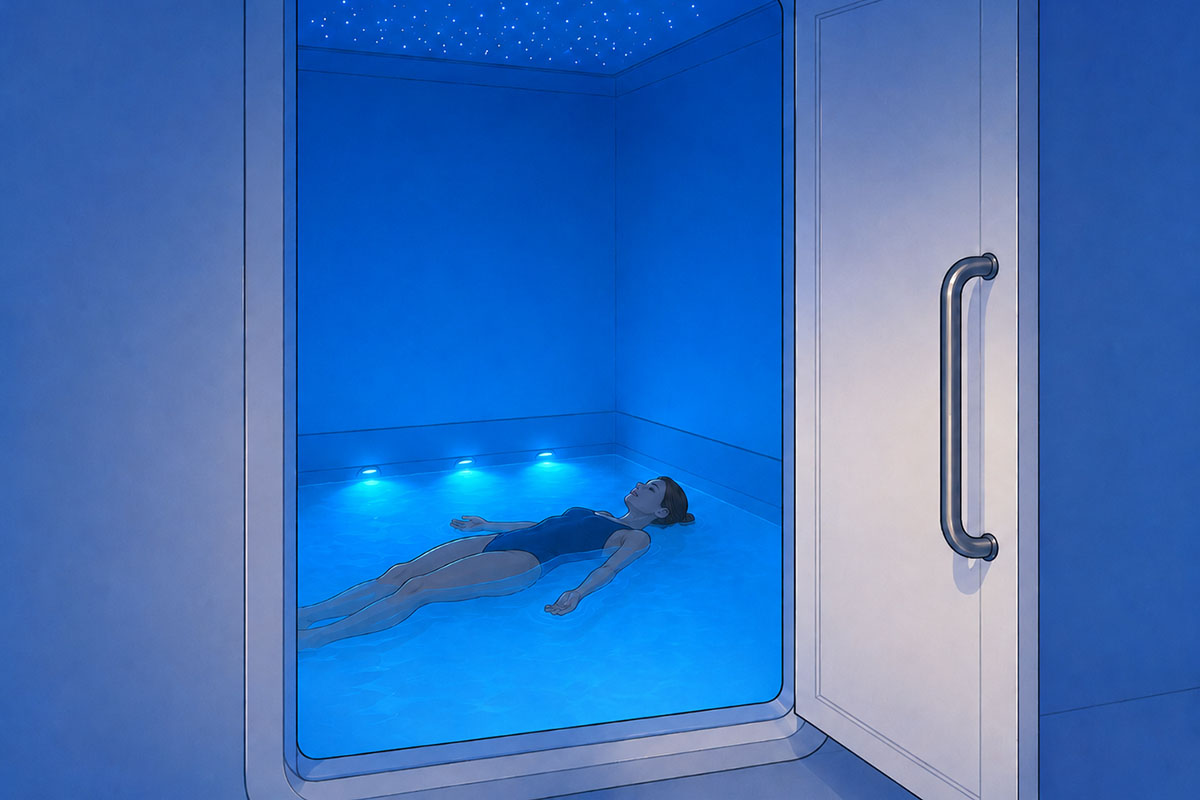
A float tank—also called a floatation tank or flotation tank—is a purpose-built environment filled with warm, salt-saturated water that allows the body to float effortlessly while light, sound and external distractions are reduced.
At first glance, the terminology can feel confusing. Older terms such as “isolation tank” or “sensory deprivation tank” can sound intense, while modern float environments, to different degrees, are designed to feel reassuringly calm, comfortable, and accessible. In practice, they all refer to the same underlying idea — creating the conditions for deep rest by greatly reducing external input.
Today, the term “float tank” is widely used as a general description for a range of float environments, including pods, cabins, and float rooms. Understanding how these terms relate to each other is one of the simplest ways to understand what floating actually is.
This article is part of our Floatation Therapy Guide, exploring how floating works, its benefits, and the different types of float environments.
What is a float tank?
A float tank is a carefully controlled environment used in floatation therapy, where a person lies in a shallow pool of warm water. The water is saturated with Epsom salt (magnesium sulphate), allowing the body to float effortlessly on the surface.
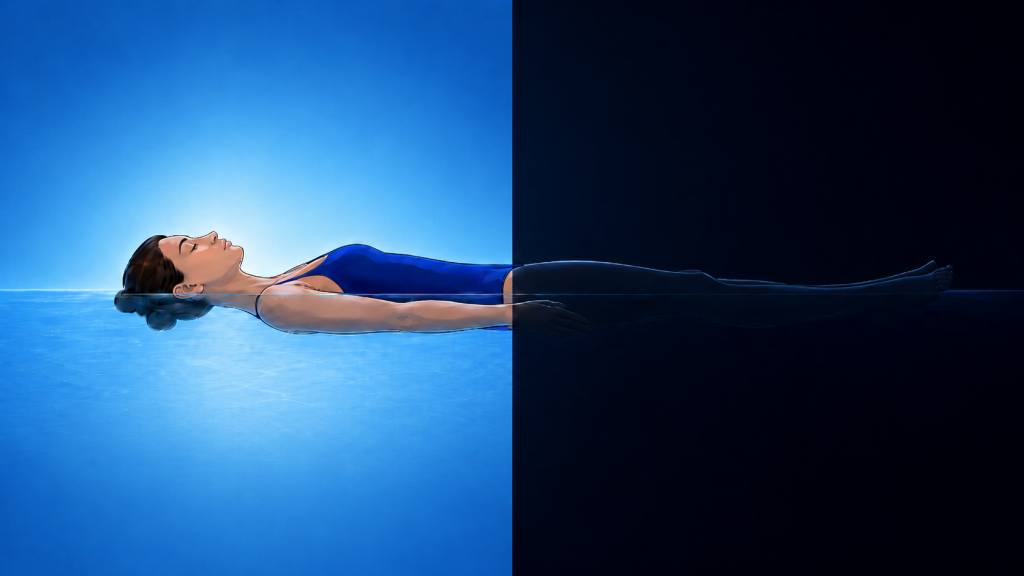
The water is heated to, or close to, skin temperature, and the environment is designed to remove light and sound. Together, these conditions create a calm, stable space that encourages deep relaxation and centredness, as the body and mind begin to settle without constant external input.
Although often associated with the term “sensory deprivation,” modern float tanks are not about discomfort or isolation, but about creating a neutral, easy-to-settle-into space.
To explore how these conditions work together in more detail, see our guide to how floatation therapy works.
Types of float tanks and float environments
Although “float tank” is typically used as a general term, it can refer to several different types of float environments. They all aim to support the same core float experience, but they can differ in how they are designed, entered, and experienced.
Isolation tank
The earliest float environments were known as isolation tanks. These were enclosed chambers developed in the 1950s for sensory research, and they laid the foundation for modern floatation therapy.
Sensory deprivation tank
In the 1970s and 1980s, the term “sensory deprivation tank” became widely recognised through research and media coverage. While scientifically accurate, the wording can sound more intense than the experience itself.
Float tank
Today, “float tank” is the most widely used general term. It is often used to describe all float environments, including pods, cabins, rooms, and other formats designed to create the same core float experience.
Traditional float tank
Traditional float tanks are enclosed, rectangular environments with a more functional, box-like design, although there can be some interesting variation on the basic design concept. Entry is usually through a sliding hatch or small door, and the user lies inside the enclosed space for the duration of the session.
These designs are often associated with the original sensory deprivation tanks developed for research, and they remain part of the terminology many people still use when describing floating.
Float pod
Float pods, although enclosed, have a sleek curved, more modernised design compared to earlier rectangular tanks, often with a little more space above the head. The user typically enters the pod and lowers a lid, or hatch, creating a quiet, self-contained space for the session.
Modern pods usually include lighting and internal controls, allowing clients to adjust audio and lighting from inside.
Variations on the pod include shell-type designs where the top half closes down.
Float cabin
Float cabins are designed with a vertical entry and increased internal height, allowing users to step in and move more easily before lying down to float. Closer in design to a float room than a tank, or pod, they offer a more spacious format while still functioning as a self-contained float unit.
Float room
Float rooms are generally larger, full-height, walk-in spaces that take this concept further by creating a more spacious and immersive environment for the float client. The extra height allows users to enter fully upright, move freely, and settle into the water without lowering a lid or canopy overhead.
While still designed to maintain the precise conditions required for floating, float rooms are structured as complete environments rather than enclosed units.
Internal controls allow the float client to adjust the environment from inside.
Float pool
Float pools are a larger, usually open format where the room surrounding the pool becomes part of the float environment. Because of their scale, the wider space needs to be carefully controlled to maintain the temperature, stillness, and reduced stimulation required for an effective float.
If you are comparing these environments in terms of user experience, design, or suitability, see our guide to float tank comparison.
What does it feel like to use a float tank?
For most people, floating feels very different from anything they have experienced before, but not in the way they might expect.
Rather than being intense or overwhelming, the experience is usually gradual, peaceful, and calming. As you settle into the water, the body becomes fully supported, and the effort of holding yourself up disappears.
With minimal, if any distractions, most people notice a growing sense of quiet. Thoughts may slow down, the body may feel lighter, and the usual awareness of the environment around you begins to soften.
There is no single “correct” float experience.
Some people describe their first float as deeply relaxing. Others find it more reflective or meditative. Some take a little longer to settle. Client feedback shows that, whatever the initial experience, most people feel noticeably relaxed afterwards.
Consecutive sessions can also vary, although regular floaters often get into a rhythm where their floats become deeper, more settled, and consistent, producing longer lasting benefits.
There is nothing you need to do during a float. You are not trying to achieve a particular state — simply lying back and allowing the environment to do the work is enough.
What often surprises first-time floaters is not how unusual it feels, but how natural it becomes once the body starts to settle.
First-time floaters often “play” for a minute or two, gently pushing back and forth and enjoying the sensation of floating without effort. As they relax into it, some people take a little time before letting go; others surrender almost immediately. There is no right or wrong way to float, and the experience usually becomes more embracing as the session progresses.
You might already be wondering what all of this actually leads to. Floating is often talked about in terms of its benefits, but those are easier to understand once you have a sense of the experience itself.
If you would like to explore that side in more detail, see our guide to the benefits of floatation therapy.
Is a float tank right for everyone?
Floatation therapy is designed to be accessible, but it is completely normal to feel unsure before trying it for the first time.
Some people are immediately drawn to the idea of quiet and stillness. Others may feel uncertain about being in an enclosed space, or unsure what the experience will actually be like.
Despite the language sometimes used around floating, modern float environments are designed to make the experience as comfortable and approachable as possible. A well-designed float suite or float environment should be easy to understand from the moment you enter, creating a feeling of calm reassurance and invitation.
Many centres also offer different formats, including more spacious options such as cabins and float rooms, to help people feel more at ease.
For most people, the initial uncertainty fades quickly once they begin floating. The experience often feels far more natural than expected.
Float tanks vs float rooms
While all float environments aim to create the same core conditions, the design of the space can influence how easily someone relaxes.
More enclosed formats, such as traditional tanks and pods, prioritise compact control. Larger formats, such as cabins and float rooms, focus on creating a more spacious and accessible environment.
These environmental differences do not change the core principles of floating, but they can affect how quickly and comfortably someone settles into the experience.
For a clearer comparison, see our guide to float rooms vs float tanks and pods.
Closing summary
A float tank is more than just a piece of equipment. It is an environment designed to create the conditions for deep rest by supporting the body, reducing external stimulation, and creating a rare sense of ease and centredness.
While the language around floating has changed over time — from isolation tanks to modern float rooms — the core idea has remained the same: creating a space where people can step away from everyday noise and experience floating for themselves.
For many people, the most surprising part of floating is not how different it feels, but how quickly it begins to feel natural.
If you want to continue exploring, you can learn more about how floating works, explore the benefits of floatation therapy, or compare different environments in our float tank comparison guide.
Next steps
Experience floating or bring it to your business
Want to compare float rooms, pods and pools in more detail? Read our float tank comparison guide
Float tank FAQs
What is a deprivation float tank?
A deprivation float tank is another name for a sensory deprivation tank, or simply a float tank. The term comes from early scientific research focused on reducing external sensory input, such as light, sound, and the physical effects of gravity.
Although the language can sound intense, modern float environments are designed very differently. In practice, the experience is calm, comfortable, and easy to settle into.
What is a sensory deprivation tank?
A sensory deprivation tank is a float environment designed to reduce light, sound, and external stimulation as much as possible. Inside, the body floats effortlessly in warm, salt-saturated water while the surrounding environment remains quiet and controlled.
Although the name focuses on what is removed, most people experience it as a gradual shift toward stillness, ease, and rest.
What does it feel like to use a float tank?
For most people, the experience is quieter and more natural than expected. As the body settles into the water, the effort of holding yourself up disappears and physical tension begins to ease.
At the same time, external distractions fade. Some people notice their thoughts slowing down, while others simply enjoy the feeling of being undisturbed for a period of time. There is no single “correct” experience, and each session can feel slightly different.
How long is a float session?
Most float sessions last between 45 and 90 minutes, with 60 minutes being the most common starting point. This allows enough time for the body to settle and the experience to unfold naturally.
Some centres also offer longer sessions, particularly for people who have floated before and feel comfortable in the environment.
Do you wear clothes in a float tank?
Most people float without clothing, as this allows the body to relax fully in the water without restriction. The experience takes place in a private, self-contained environment, so you are completely on your own during the session.
Clear guidance is usually provided beforehand, so you know exactly what to expect and can feel comfortable from the start.
Are float tanks claustrophobic?
It is very common to wonder about this before a first float. Some environments, such as pods or traditional tanks, are enclosed by design, which can feel unfamiliar at first.
However, many people find the experience more comfortable than expected once they settle into the water. There is no sense of pressure or restriction from the water itself, and you remain fully in control throughout the session.
For those who prefer more space, many centres also offer more open formats, such as float rooms.
Can you fall asleep in a float tank?
Yes, some people drift into a deeply relaxed state and may briefly fall asleep during a float. Because the water is highly buoyant, the body remains fully supported throughout the session.
Even without sleep, many people find the level of rest feels deeper than usual, as both the body and mind have a chance to settle without interruption.
Can you open a float tank at any time?
Yes, you are always in full control during a float session. In most float tanks and pods, the lid or door can be opened easily at any time from the inside.
Many people choose to begin with the lid partially open, or with some light in the room, and then adjust the environment as they become more comfortable. You are never required to remain fully enclosed.
Floatation therapy works best in a calm, stable environment, so opening the lid or door can slightly affect temperature and the overall feel of the space. This is completely normal, especially while you are getting used to the experience.
In more spacious environments, such as float rooms, there is no lid at all, and you can move freely while the room itself maintains the conditions needed for floating.
Is a floatation tank the same as a float tank?
Yes. “Floatation tank” and “flotation tank” are alternative names for a float tank: a broad term for a float environment. Traditional tanks, pods, cabins and float rooms differ in design and entry, but are built around the same core float experience.
Still have questions?
Send us a message and we’ll put you in touch with a member of our international team today.
Further reading
Related guides
References
- Kjellgren A, Westman J (2014). Beneficial effects of treatment with sensory isolation in flotation-tank as a preventive health-care intervention – a randomized controlled pilot trial. BMC Complementary and Alternative Medicine, 14, 417.