Client comfort
Claustrophobia and floating
Why float rooms feel more open
Claustrophobia is one of the biggest concerns many people have before trying floatation therapy. The hesitation starts long before they ever visit a float centre. They typically imagine something small, dark, enclosed, and difficult to leave.
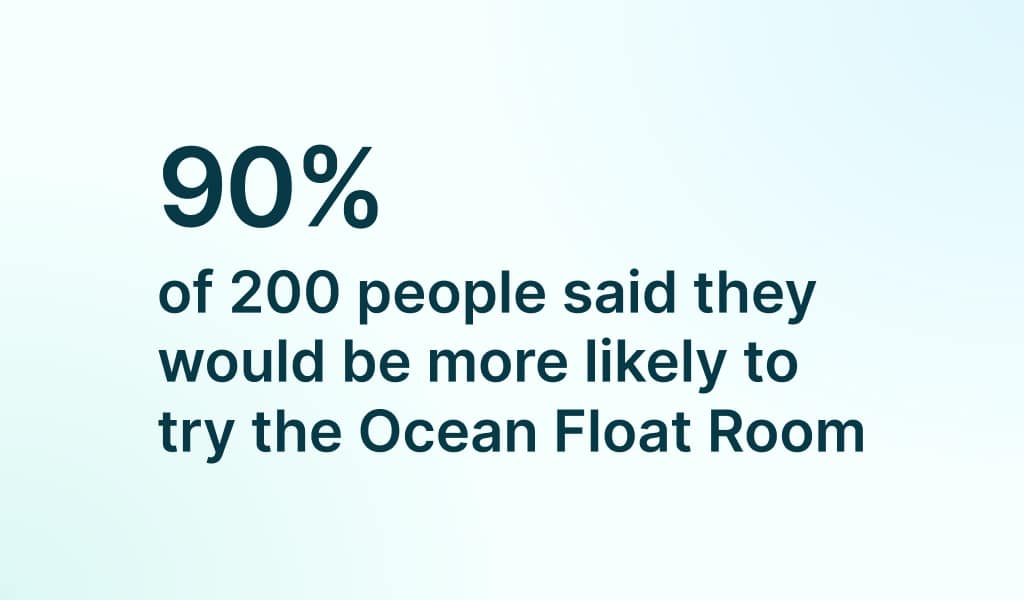
Perceived claustrophobia in traditional float tanks can significantly impact client uptake, especially among first-time floaters.
Although the fear is understandable, it is usually based on outdated images of early sensory deprivation tanks, not the reality of modern float room design. Today’s float rooms are spacious, softly lit, and designed to help people feel calm, unhurried, and in control from the moment they step inside.
For float centre owners and prospective buyers, this is also one of the clearest examples of how float room design can shape first impressions, client confidence, and willingness to float.
This article complements our Float tank comparison guide and explores one of the most common concerns people have before their first float.
In this article
- Why claustrophobia is such a common first-time concern
- Myth 1: “I’ll feel trapped”
- Myth 2: “It’s pitch black and silent”
- Myth 3: “I might panic or feel anxious”
- Myth 4: “I’m worried I’ll be stuck with my thoughts”
- Myth 5: “I’ll get bored”
- A float centre owner’s perspective
- Why float room design matters so much
- Tips for nervous first-time floaters
- Float rooms vs pods explained simply
- Conclusion
Why claustrophobia is such a common first-time concern
Claustrophobia is one of the most understandable worries people have about floating. Even today, many people still picture an old-style sensory deprivation tank: something closed, dark, and restrictive.
That image has stayed in the public imagination for decades, even though modern float rooms are nothing like those early designs. The fear is real — but in many cases, the thing being feared is no longer the reality.
For nervous first-time floaters, the biggest barrier is often not the float itself. It is the mental image of what they think the environment will feel like.
Myth 1: “I’ll feel trapped”
This is the most common fear — and often the one that fades fastest once someone sees a float room in person.
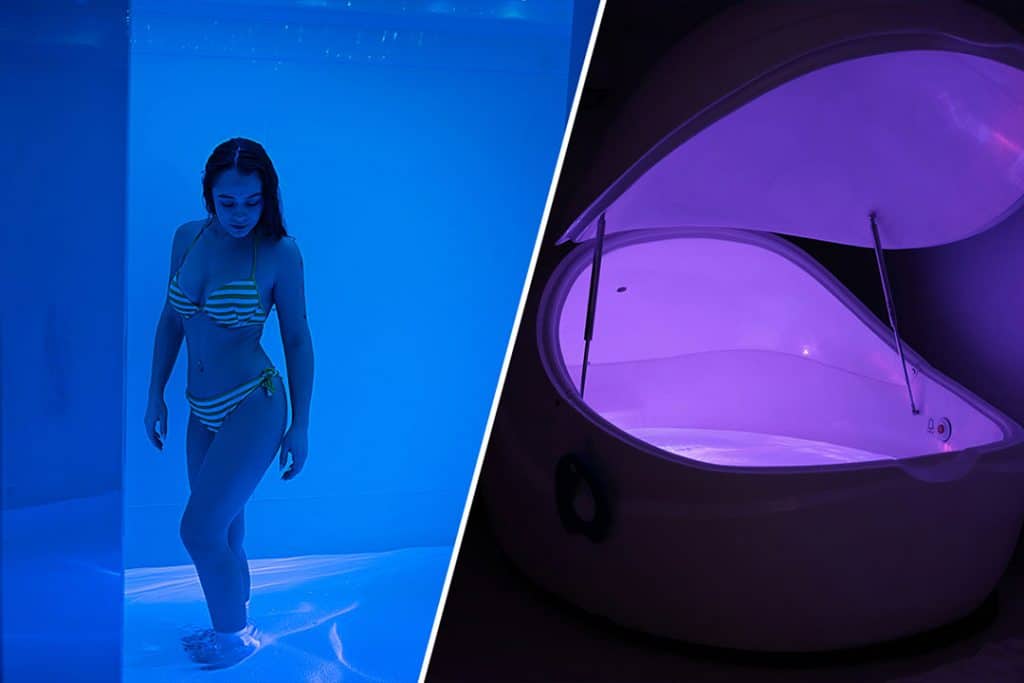
A modern float room is a full-height space you simply walk into. There is no lid above you, no capsule to climb into, and nothing lowering over your body. The environment feels more like a calm private room than a chamber.
You also remain fully in control. The door does not lock. You can leave it slightly open if you wish. You can float with soft lighting, gentle music, or guided audio. That sense of choice is often what turns apprehension into relief.
For a broader look at how float rooms differ from pods and other float tank formats, see our Float tank comparison guide.
Myth 2: “It’s pitch black and silent”
Darkness and silence are optional, not compulsory.
The default setting for any float session is to begin with gentle music or sounds as a gradual transition into stillness. Ocean Float Rooms’ clients have control over both music and lighting and can take comfort in both for as long as they wish, which nervous first-time floaters find very reassuring.
This matters because it changes the emotional tone of the experience. Instead of feeling plunged into the unknown, the client can settle in gradually and discover what level of sensory reduction feels comfortable.
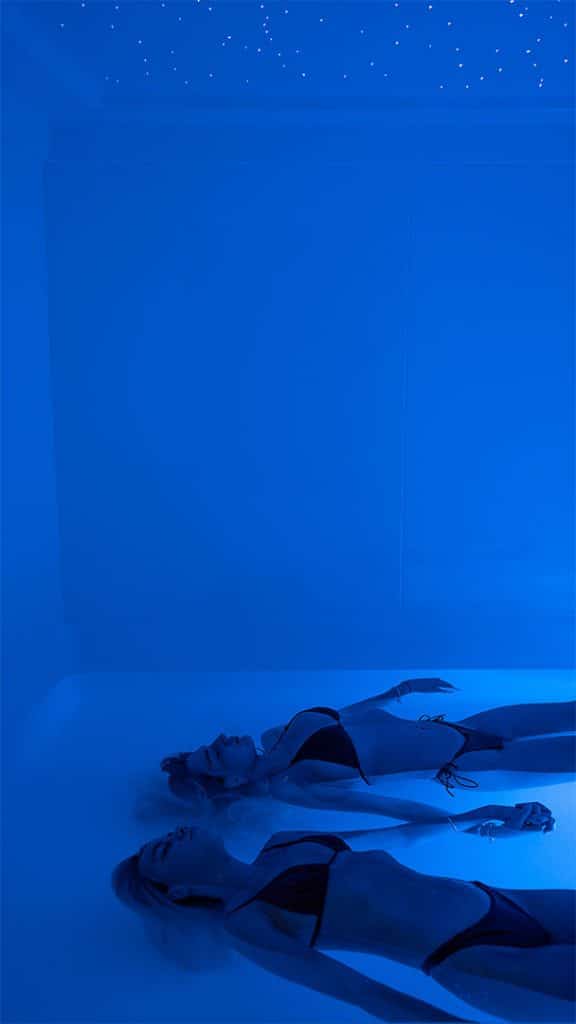
Features such as star-light ceilings can also help the space feel softer, calmer, and more inviting for nervous beginners.
In spite of this support, a common occurrence is that the lights and music are turned off partway through the float.
Many regular floaters choose to reduce the introduction music or turn it off altogether.
Myth 3: “I might panic or feel anxious”
Anticipatory anxiety is normal, although less common as people learn more about floating.
Modern float room design also helps reduce any anxiety before the float has even begun.
At first sight the float room invites you in. High ceilings, soft curves, warm lighting, and spaciousness. And once inside the natural-feeling airflow contributes further to the calming environment. Nothing about the space suggests being shut in. The room feels spacious, open, quiet, and easy to understand.
That is why people discover that any fear begins to dissolve as soon as they enter the room. The environment itself communicates benignity, and that makes it far easier to relax into the experience.
Myth 4: “I’m worried I’ll be stuck with my thoughts”
Some people worry that with no external distractions, they will be forced to listen to their own anxiety, resulting in a “loud” or chaotic mind — that floating might feel mentally overwhelming rather than relaxing.
It’s a familiar feeling.
Lying awake at night in a quiet room can sometimes bring thoughts to the surface, especially when there’s nothing to distract you.
Floating, however, is different.
The environment is so powerfully relaxing that it is an effort to resist it. For those with very active lives, it’s not unusual for thoughts to drift in at first, sometimes seemingly random or disconnected.
But over time, something shifts.
The mental “noise” softens. And by the end of the session — often while showering or shortly after — many people describe a clear, quiet sense of mental peace.
This is something we’ve consistently observed with clients in our float centres.
Myth 5: “I’ll get bored”
People sometimes fear getting bored or becoming restless. This may stem from a reliance on constant digital stimulation and/or imagining floating as an empty, passive, or uneventful experience.
In reality, once the body settles into weightlessness, most people find the experience far more immersive than expected.
The mind quietens. Time often passes quickly. And rather than feeling bored, most floaters are surprised by how present or absorbed they become in the calmness of the experience.
For all the talk today about mindfulness, floating takes you there and beyond with the greatest of ease.
A float centre owner’s perspective
One of the clearest examples of how float room design can change the experience comes from float centre owner Phil Steward.
Phil’s first float was in an older enclosed tank — small, awkward to enter, and undeniably claustrophobic. The benefits were powerful, but the physical environment was difficult enough to leave a lasting impression.
Years later, when opening his own clinic, the issue surfaced again in a more personal way. His partner Ellie was claustrophobic and would not consider getting into a tank. Discovering a float room changed that. The walk-in layout, generous height, and room-like feel made the experience seem open, understandable, and welcoming rather than restrictive.
That is why Phil’s story matters so much. It shows that the fear is real, but also that design can completely change how floating is perceived.
Why float room design matters so much
Float rooms are intentionally designed to remove many of the triggers people associate with enclosed spaces.
Standing upright in the room immediately changes the psychological experience. The soft lighting feels welcoming rather than severe. The airflow feels natural. The door closes lightly and never locks. Everything about the room supports calm rather than confinement.
This design difference is one of the biggest reasons float rooms feel so much more approachable to people who might otherwise avoid floating altogether.
It is also one reason many businesses choose float rooms when they want floating to feel accessible to the widest possible range of clients.
Tips for nervous first-time floaters
A few small choices can make a big difference to how safe and comfortable the first float feels.
- Keep the lights on for as long as you want
- Leave the door slightly ajar if that feels more comfortable, and close it when and if you’re ready to
- Ask for a longer introductory phase of calming music
- Make sure you know where the internal controls are located beforehand
- Take a moment or two to stand in the room, before getting into the water
Nervous people don’t need to “push through” the fear. They just need enough control and reassurance to settle naturally into the experience.
Float rooms vs pods explained simply
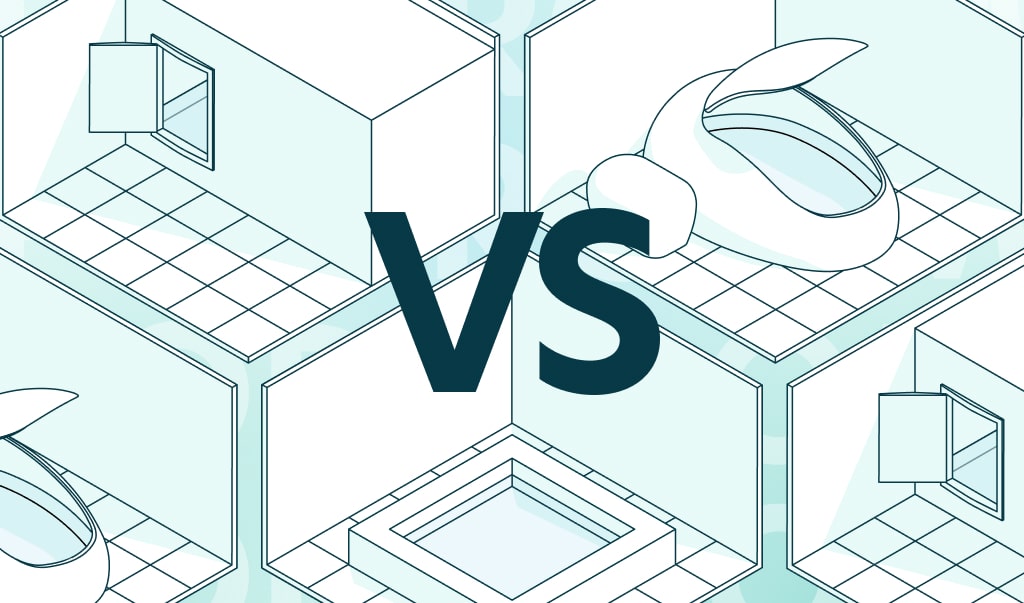
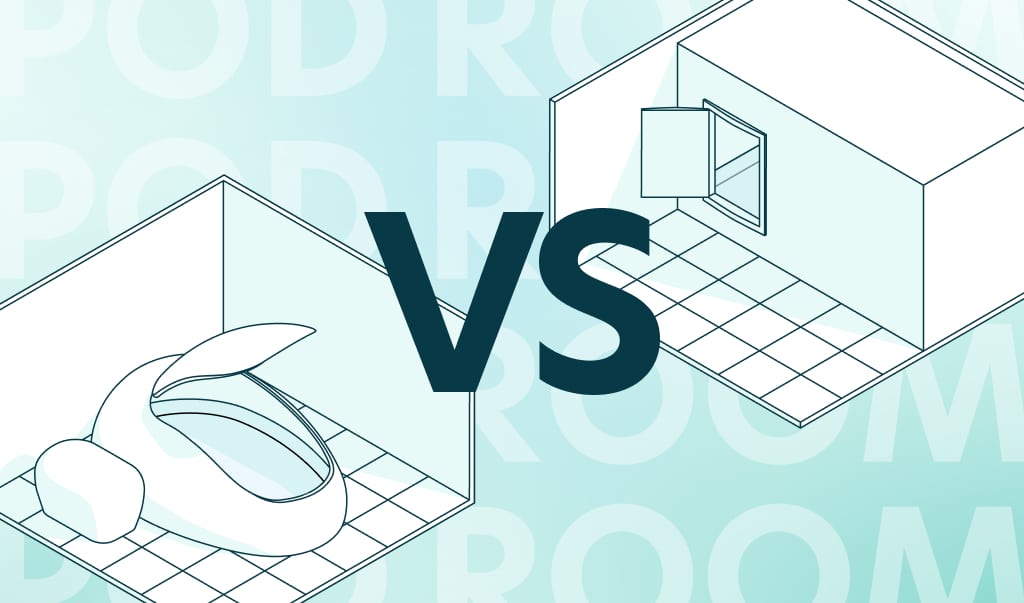
Pods can be excellent for some floaters. But they do involve entering a more enclosed form and, in most cases, lowering a lid or canopy over the body.
These design differences are enough to create hesitation for many people.
Float rooms remove these barriers. You enter a serene, generous space and close a normal-style door behind you (Or leave it slightly ajar!). The layout feels more familiar, more natural, and far more reassuring to people who are uneasy about enclosed environments.
If you want to compare the wider practical and commercial differences, read our Float tank comparison guide.
Conclusion
Claustrophobia concerns should not stop anyone from exploring floatation therapy. In many cases, the fear is based on an outdated idea of what floating looks like, not the reality of modern float room design.
Today’s float rooms are spacious, calm, and intentionally built to help people feel at ease. Once someone steps into a full-height float room, the fear of being shut in is often replaced by relief — and then by curiosity about how peaceful the experience actually feels.
Floating should feel freeing, not fearful. Good design makes that possible.
Related articles
Explore more guides on float room design and comfort
Continue exploring the topics that shape first-time confidence, comfort, and the wider float room experience.