Comparison series
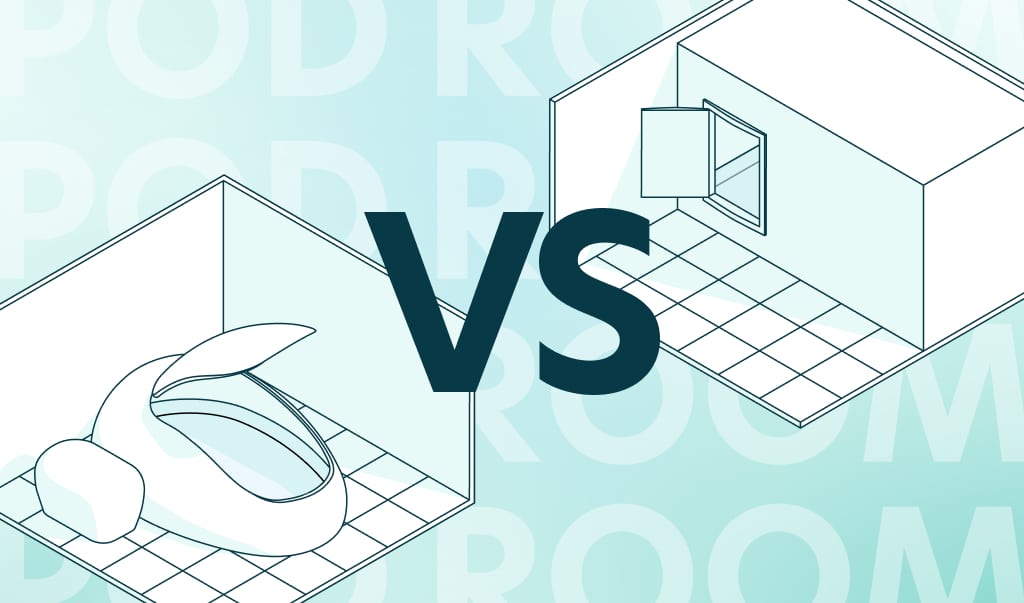
Float room vs float pod: A space comparison
Many people assume a float room requires a larger suite than a float pod. It’s an understandable assumption — a float room looks more spacious, so you’d expect it to need more space.
But surprisingly, the opposite is true.
A float room is actually more space-efficient than a pod, and there are several very practical, design-based reasons why.
At a glance: Float rooms often use space more efficiently at a suite level, despite being larger individually. Their rectangular footprint and walk-in access can reduce wasted space and create more flexible, usable layouts.
This article is part of our Float Room Comparison Series, exploring how float room design influences space, comfort, and profitability.
Placement of the equipment
In my own float centre, I used the original ‘box style’ flotation tanks. These couldn’t be placed directly against the back wall — partly because the side of the tank wasn’t a vertical surface, and so it would create hard-to-reach cleaning surfaces (“dust holes”) on the tank and the floor, and partly because it wouldn’t look right aesthetically. Being curious, I tried it, and it didn’t look right!

This challenge is usually greater with pods.
Pods do not have an even width, or a vertical side, creating larger hard to reach spaces when too close to a wall. Their rounded, sculptural form also means they’re usually positioned away from the walls to maintain balance and visual appeal in the suite.
In other words, the very features that make pods look sleek can lead to unused, wasted space around them.
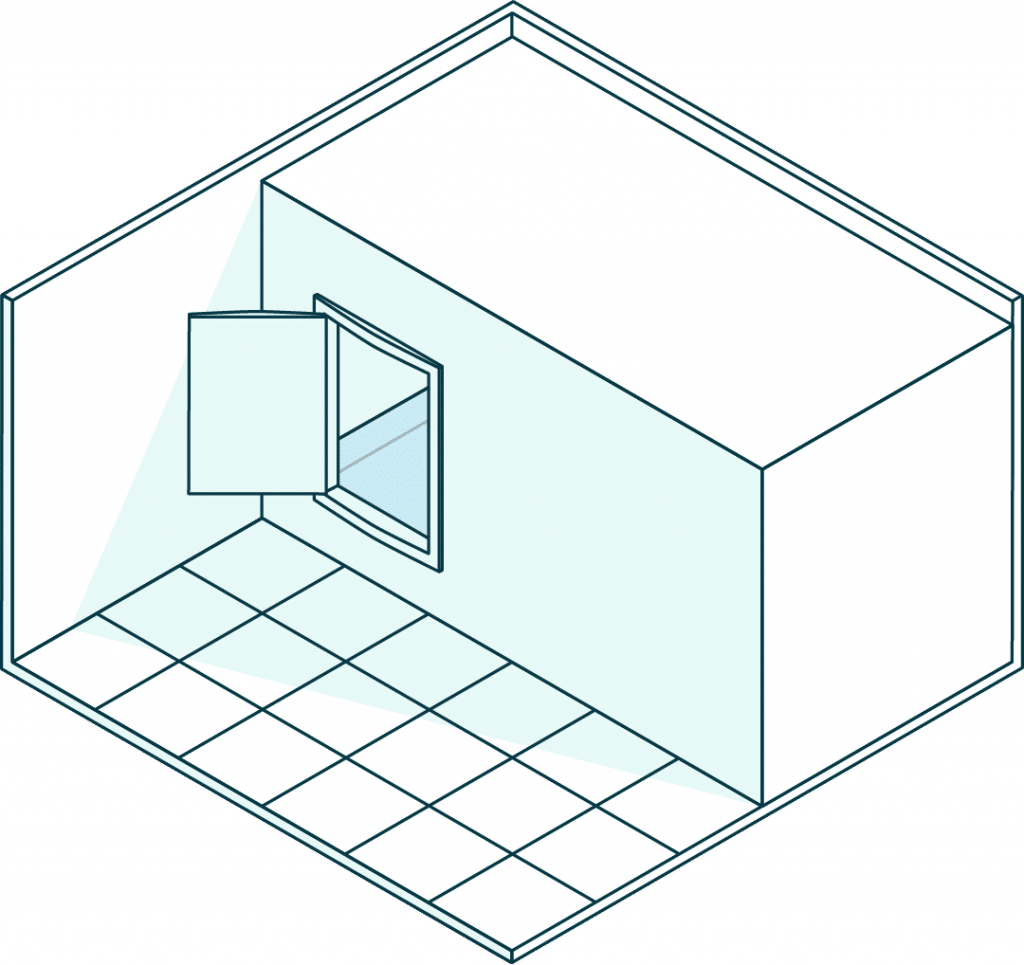
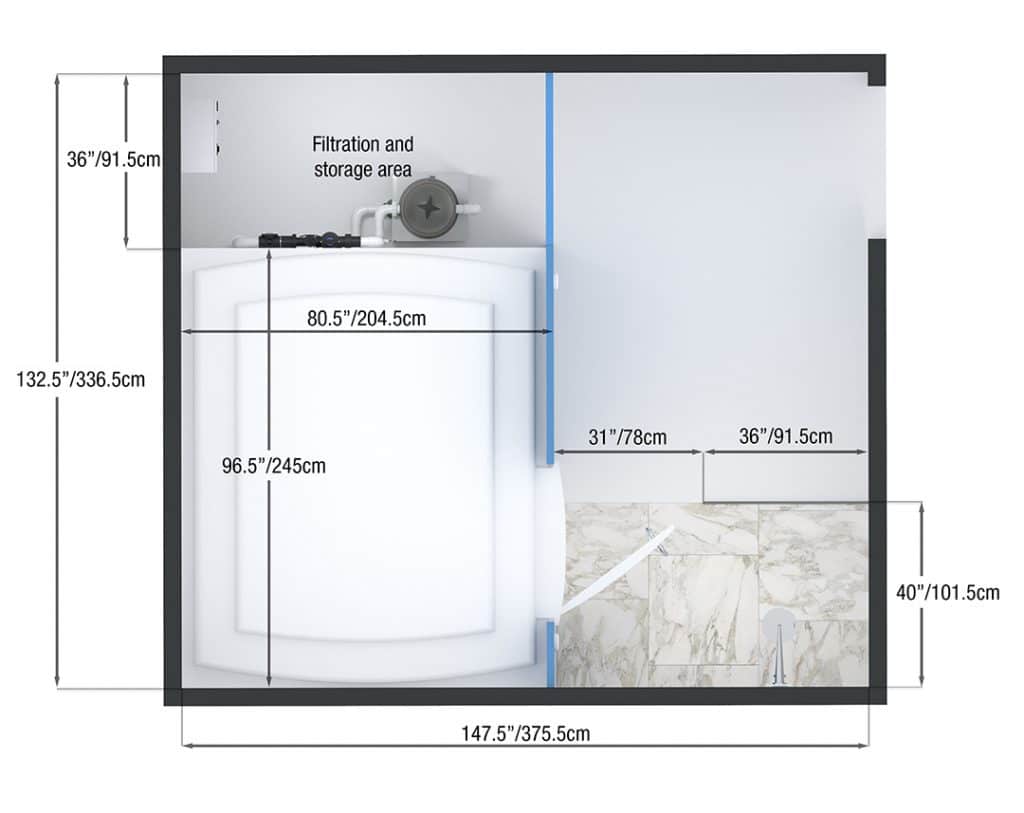
A float room, on the other hand, is typically designed to be installed along two walls — the back wall, and one side wall.
The remaining exposed end of the float room provides space for the filtration system and electronics. In effect, you create a room within a room, where every square metre serves a clear purpose. Because of this design, the float room optimises space whether the door is on the side, or at the end, without changing its efficient footprint.
Floor area efficiency
Float rooms follow a simple, rectangular footprint — much like many houses.
That fundermental shape gives maximum flexibility without wasted curves or irregular angles.
And like a lovely house, great beauty can be created by tweaking the design and adding features.
Ocean Float Rooms start with this efficient rectangular base and add subtle interior curves and a beautiful, steep ceiling to enhance the aesthetic — but none of these refinements compromise space efficiency.
Pods, by contrast, are not rectangular. Their variable width, which is typically wider in some areas and narrower in others, is part of their appeal, but it reduces how efficiently they use floor space.
Float suite size comparison
When you combine both floor area and placement efficiency, the difference becomes clear.
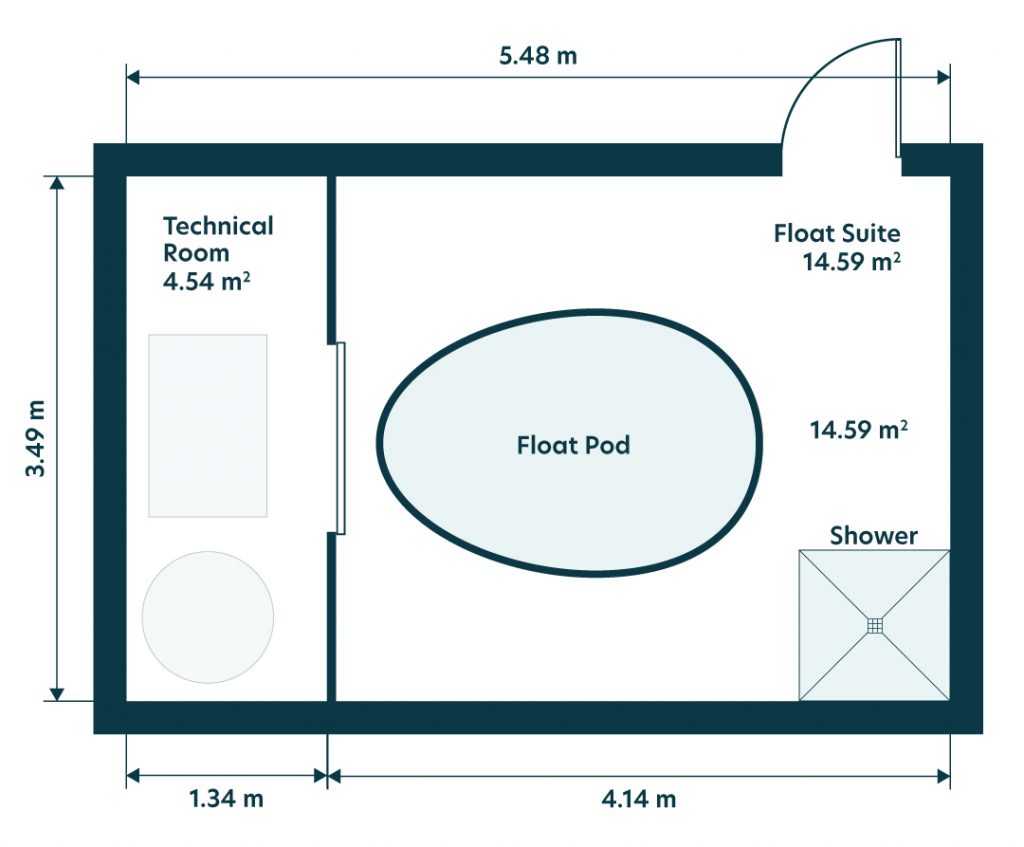
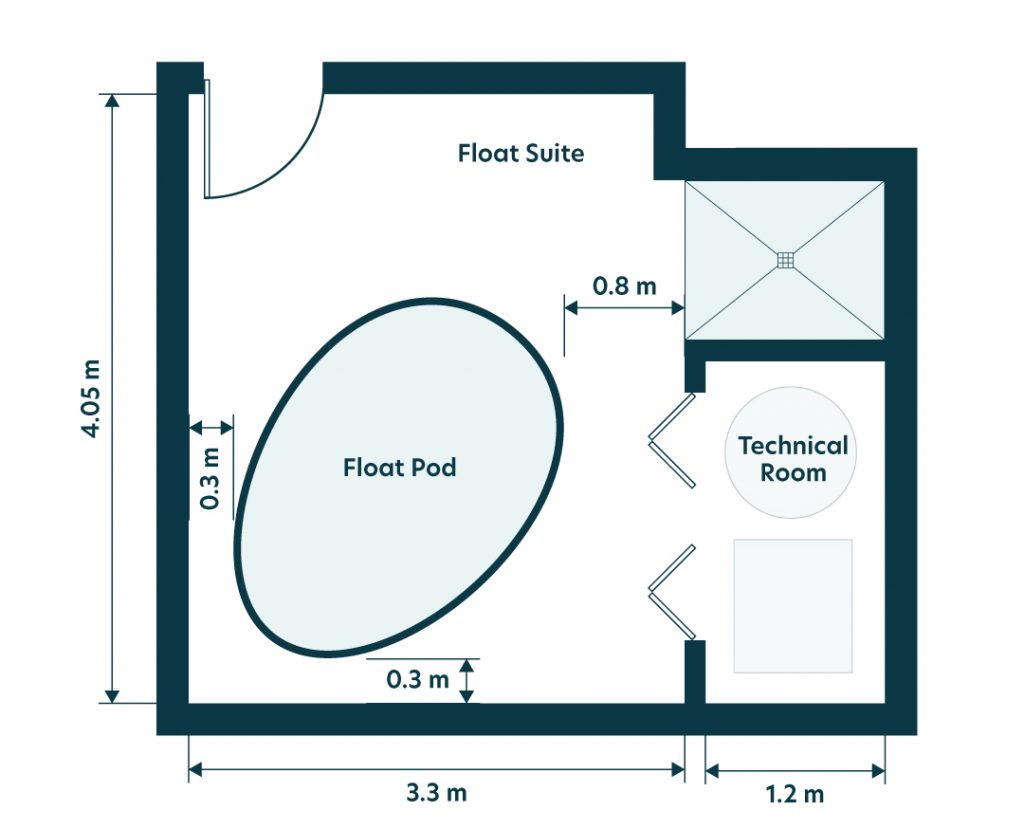
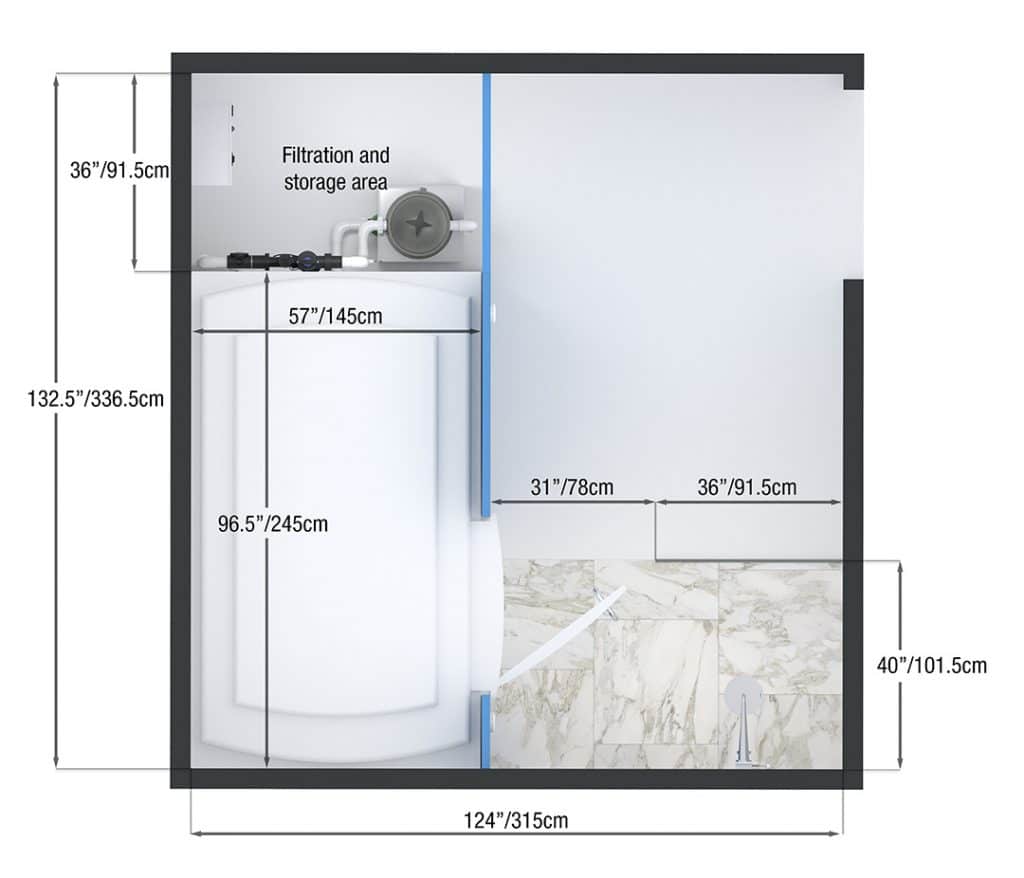
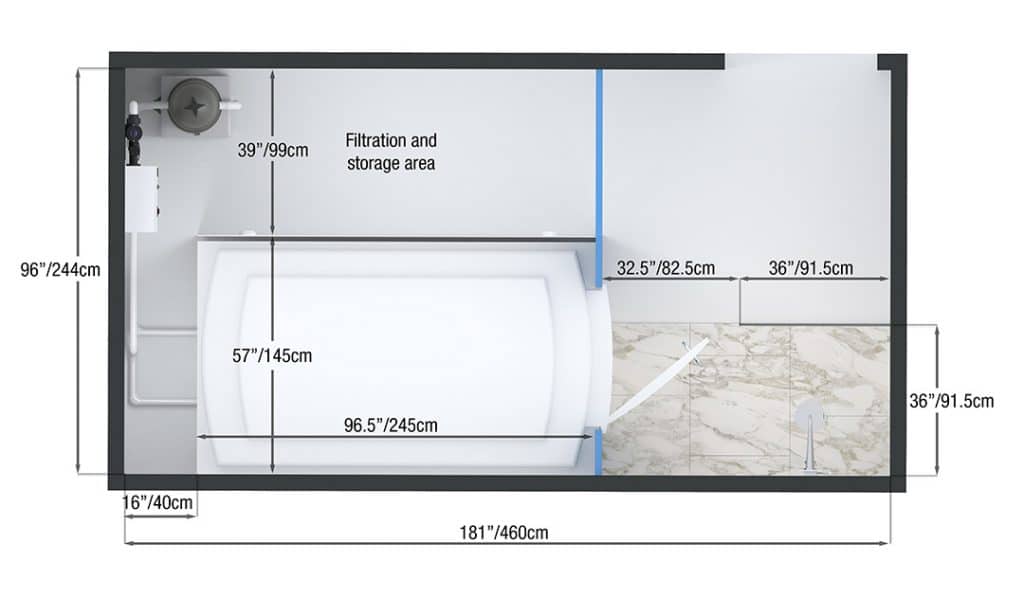
Below are two float suite layout examples from a pod supplier compared to Ocean Float Room layouts. The suites in all cases are comfortable rather than space limited and so make a good comparison. The total suite area (in square metres) is shown beneath each plan.
| Suite Type | Layout | Suite Size |
|---|---|---|
| Pod 1 | Typical pod layout | 19.1 m² |
| Pod 2 | Typical pod layout | 18.2 m² |
| Single Float Room | Side Door | 10.6 m² |
| Single Float Room | End Door | 11.2 m² |
| Double Float Room | Side Door | 12.6 m² |
Swipe to compare →
To put it into perspective: A comfortable pod suite can require up to 50% more space than our comfortable double float room suite, which is designed for two clients at a time.
Limited float suite space
It is when space is limited, or at a premium, that the Ocean Float room comes into its own.
While some pod suites may be able to be reduced to 12 or 13 square metres, a float room suite can go much further.
Because every part of the float room suite is practical and usable, Ocean Float Rooms has created successful, highly functional, single Float Room suites in as little as 8 m2.
Remarkably, the smallest suite we ever installed a float room in was a staggering 6 m2. That was the only space the London UK customer had in his beauty salon, and he wanted a float room to add to his revenue stream. We made it work for him and his profits grew.
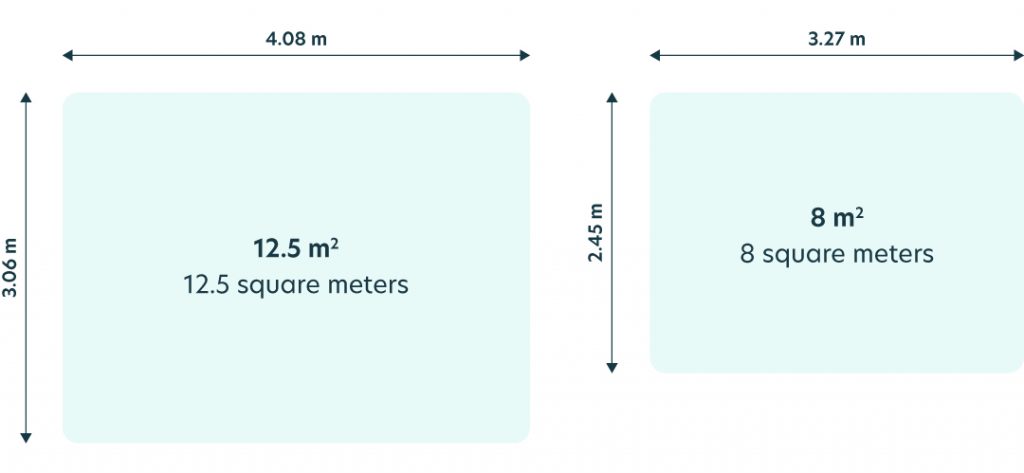
The suite size can be further reduced if the filtration and electronics are housed outside of the float suite (off site).
Financial implications
This space efficiency has very real business benefits.
If your float rooms take up less space, you have two practical options:
- Open your float centre in a smaller site, lowering ongoing rent and energy costs
- Fit one or more treatment rooms into the same site, increasing overall revenue potential
This space efficiency translates directly into your bottom line.
Whether you reduce overheads by operating in a smaller premises, or increase capacity by fitting more rooms into the same space, the result is the same — a more efficient, more profitable float centre.
Conclusion
The misconception that float rooms require more space than pods is widely held — but as the numbers show, it’s simply not true.
Thanks to their smart rectangular design and wall-to-wall installation, Ocean Float Rooms deliver more comfort and functionality in less space, helping float centres operate more efficiently and profitably year after year.
Related articles
Explore more float room guides
Continue exploring the topics that shape first-time confidence, comfort, and the wider float room experience.