Real experience
Claustrophobia & floating: Phil's story of discovering float rooms
Claustrophobia is one of the most common concerns people have before trying floatation therapy. Many still imagine something small, sealed, or even coffin-like — and for many, that image is enough to stop them exploring the experience at all.
This personal story from float centre owner Phil Steward helps explain why that fear is so understandable — and why modern float rooms can feel completely different. Phil’s journey began in one of the older enclosed tanks that really did feel claustrophobic. Years later, when he discovered float rooms, everything changed.
We’ve kept Phil’s story close to his original words while lightly shaping it into a clearer read for today’s audience. It remains one of the most relatable examples of how much the float environment matters — especially for people who feel uneasy in enclosed spaces.
This article sits alongside our main guide, Claustrophobia and floating: why float rooms feel more open.
In this article
Phil understands the fear
Phil Steward says he has heard some version of that sentence countless times. It comes from people who are curious about floating, interested in the benefits, but held back by the image they have in their heads.
And he understands exactly why.
For many people, the phrase float tank still brings to mind a small capsule, a lid closing overhead, and the feeling of being shut into something too small. That image has persisted for years — and in Phil’s case, it was not just a misconception. His first experience really was like that.
Phil’s first float was genuinely claustrophobic
Phil’s introduction to floating came in an older-style tank — the kind that felt more like climbing into a capsule than stepping into a calm, welcoming float room.
He describes it as small, awkward, and undeniably claustrophobic. He could hardly sit up in it without banging his head. Getting in was hardly graceful either: stepping up, grabbing the bar above, and swinging himself in feet first “like an astronaut entering a space capsule.”
It was not an ideal environment — especially for someone already dealing with pain. And yet, despite the discomfort of the space itself, the float had a profound effect on him.
That contrast matters. The benefits were real. But so was the claustrophobia.
Floating became part of his recovery
Phil did not discover floating out of casual curiosity. He came to it because he needed help.
After breaking his back and undergoing surgery, he was left in such severe pain that everyday life became difficult. He was only twenty. The prognosis he received was deeply discouraging, and he was effectively told that little could be done beyond pain management and trying to stay as comfortable as possible.
Floating became part of a very different outcome.
He credits floatation therapy with helping his body recover, along with treatment, rest, and focused self-healing visualisation. In his own words, floating saved him. It offered relief, space to recover, and a level of physical and mental calm that became deeply important in his healing journey.
So even though the tank environment itself felt cramped and uncomfortable, the impact of the float was powerful enough to stay with him.
Then came a very real problem: Ellie would not get into a tank
Years later, when Phil and Ellie, his wife, were preparing to open their own clinic, he knew he wanted floating to be part of it.
But there was one obvious issue: Ellie was claustrophobic, and there was simply no chance she was going to climb into a tank.
It did not matter how modern, polished, or attractive the tank looked. To her, it was still a small, enclosed box with a lid. That single design reality overrode everything else.
Phil tried to make the case. He even argued that the lid could be left open or slightly ajar — though he admits now that doing so would compromise the experience as the warm air would rise and Ellie would feel cold. The more he pushed the point, the clearer it became that emotion (fear) trumps reason every time.
The issue was the environment itself.
The breakthrough: discovering the float room
Everything changed when they discovered the float room.
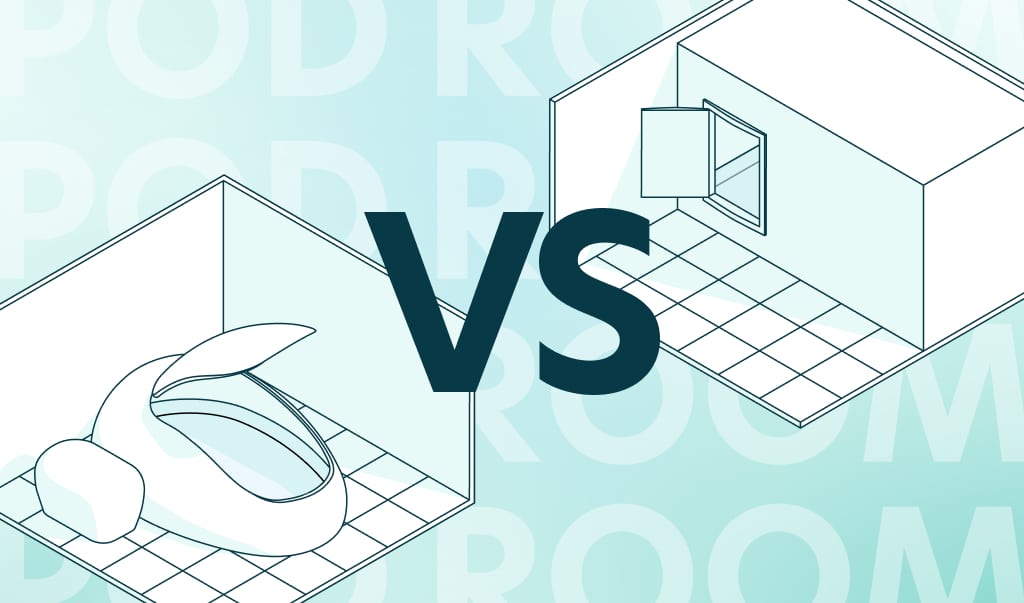
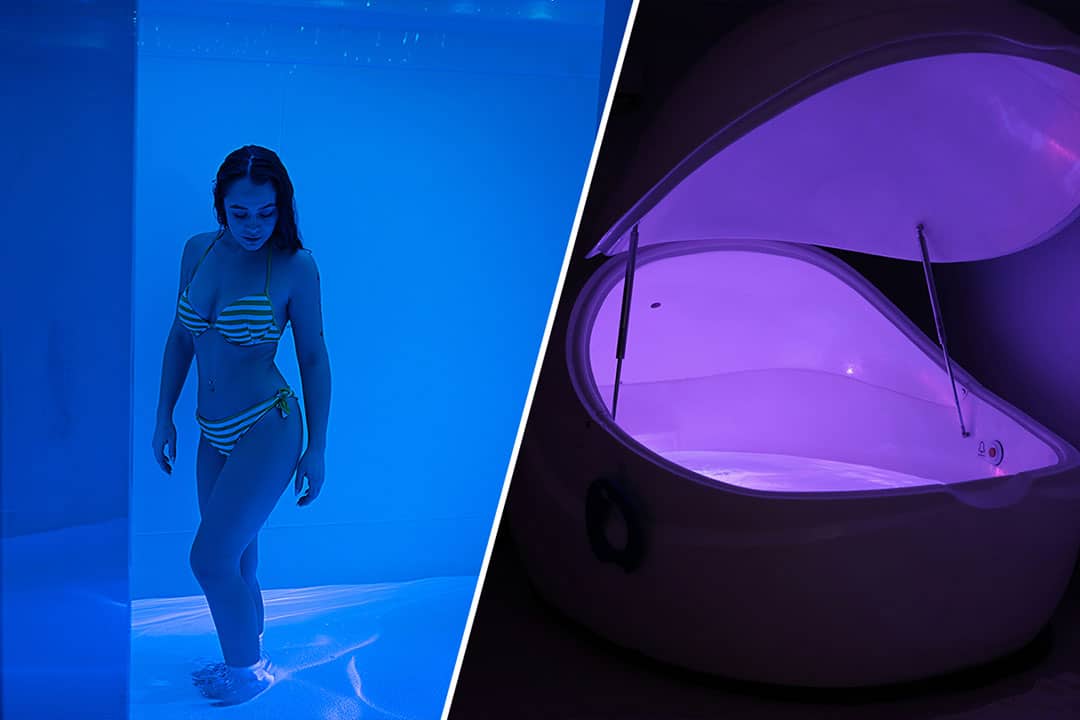
Instead of a capsule or pod, this was a full-height, walk-in space — more like a small private room than a tank. Phil describes it as being a little like a sauna in scale, but purpose-built for floating. Inside, there was over two metres of height, enough for even a very tall person to stand comfortably upright. The floating area itself felt generous and open, not tight or restrictive.
There were fibre-optic lights on the ceiling. There was a normal style door to walk through. There was no awkward climb in, no lid above the body, and none of the psychological pressure created by enclosed design.
Most importantly, Ellie felt at ease.
That was the moment everything clicked. Once the environment changed, Ellie changed and the experience became approachable.
What clients said confirmed it
Phil says the response from clients reinforced the same lesson again and again.
People would see the float room for the first time and immediately say some version of: “Oh — that’s not at all what I thought it would be like.” Many had expected exactly the same old image many people still carry: a box with a lid. Some admitted they would never have tried floating if that had been the only option.
That reaction is important because it reveals how often the fear begins before someone has even seen the real environment. Once the room is visible — once they can see it, stand in it, and feel its calming spaciousness — the fear and concern dissolves away.
For Phil, that is why choosing a float room was one of the best decisions they ever made.
Why Phil’s story matters
Phil’s story is powerful because it does not dismiss claustrophobia, or treat it as a mild feeling, easily rationalised away. It validates it.
He knows older float tanks could feel cramped. He knows why some people hesitate. He knows that for someone with claustrophobia, the physical design of the environment is not a small detail — it is a deciding factor.
And that is exactly why float rooms matter.
Modern float rooms remove many of the cues people associate with being trapped, or enclosed. You can stand upright. You can walk in normally. The environment feels spacious, safe, and understandable. The door feels familiar. Soft lighting can stay on. The whole experience feels reassuring, welcoming, and supportive.
For many nervous first-time floaters, that design difference is not just helpful. It is the breakthrough that makes floating possible in the first place.
Conclusion
For people who think that floating means climbing into a small, enclosed tank, Phil’s story is a reminder that the industry has moved on — and that the environment makes all the difference.
Floatation therapy itself can be deeply restorative. But for people who are claustrophobic, or simply anxious about enclosed spaces, the design of the float environment matters enormously. A float room can turn what once felt intimidating into something calm, open, and genuinely inviting.
Floating should feel freeing. Phil’s story shows how better design helps make that possible.
Related Articles
Explore more guides on float room design and comfort
Continue exploring the topics that shape first-time confidence, comfort, and the wider float room experience.